
GTA 6: Famitsu's Full Rob Nelson Interview Translated Into English
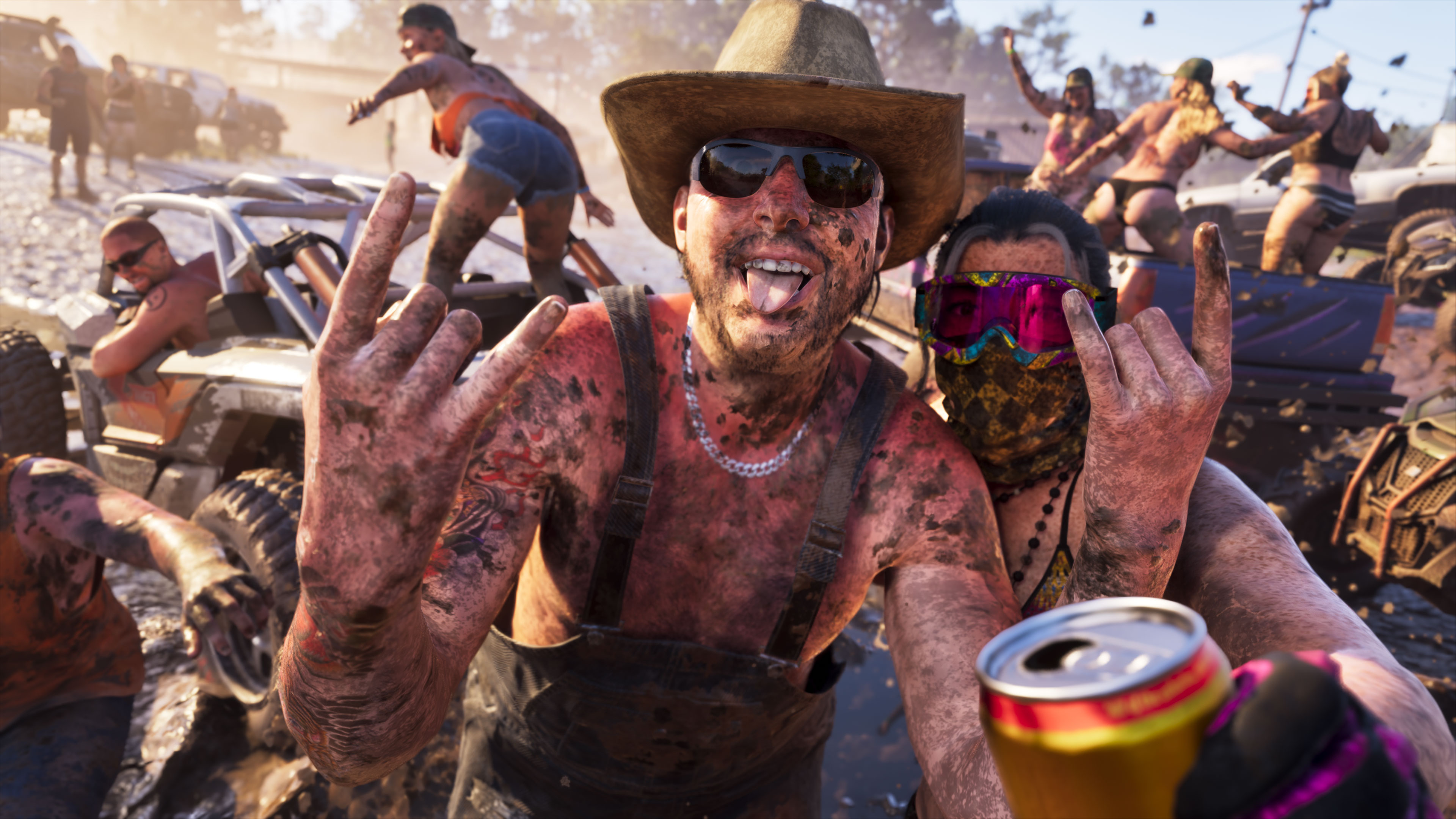
Famitsu's GTA 6 preview is one of the most detailed we've seen, featuring an extensive interview with Rockstar's Rob Nelson. We covered the key details when it was published, but there's plenty more to discover, so we've translated the full interview into English.
This article has been translated from the original Japanese. Some words, phrases or meanings may differ slightly in translation, but we have aimed to preserve the original meaning and details as accurately as possible. Please check out the original article at Famitsu for the original Japanese version.
This article is a long read, and could take up to 40 minutes, but trust us when we say it's very much worth it!
Grand Theft Auto VI (GTA VI), from Rockstar Games, is scheduled for release on PlayStation 5 (PS5) and Xbox Series X|S on November 19, 2026.
Pre-orders began in June, when details of the Ultimate Edition and pre-order bonuses were also revealed. It is still fresh in our minds how this suddenly made the fact that the game really is going to be released feel much more tangible.
Then, at 4:00 a.m. Japan time on Friday, August 28, the extended video “Grand Theft Auto VI: An Extended Look” was released on Netflix. From 10:00 a.m. the same day, it will also be available to watch on YouTube and the game’s official website.
The extended video reveals even more details about the game, but ahead of its release, Famitsu recently visited Rockstar North, Rockstar Games’ studio in Edinburgh, Scotland.
The purpose of our visit was an exclusive interview with Rob Nelson, one of the central figures in GTA VI’s development and Rockstar North’s Head of Development and Co-Studio Head.
Rob Nelson has worked on the development of major Rockstar Games titles including Max Payne 3 and Red Dead Redemption 2 (RDR2), and is also involved in the development of GTA VI. During this interview, although our time was limited, we were able to speak with him while watching the latest footage as well as actual gameplay. As a result, this is a lengthy interview focusing primarily on finer details such as systems that may be difficult to understand from the publicly released trailers and extended footage alone.
What we glimpsed through this was the new experience created by the game’s two protagonists, Jason and Lucia, and the possibilities for open-world games that are being expanded through an uncompromising pursuit of realism. Open-world games are often promoted with slogans along the lines of “live another life in a game,” but this title takes that concept to the next level and genuinely attempts to let players experience the lives of Jason and Lucia. In everyday life, there are many occasions when we are forced to make choices. But those choices are not simply a matter of YES or NO, and nobody knows what their consequences will be. The same is true in this game.
Here is a glimpse of a title aiming to become the latest and greatest achievement in this globally renowned series.
The Intention Behind Making Jason and Lucia the Protagonists
Famitsu: Thank you very much for giving us this extremely valuable opportunity. To get straight into it, the first thing I’d like to ask is why you chose Vice City as the setting for GTA VI.
Rob: Modern-day Florida and Miami have an enormous variety of people, lifestyles and areas. They have tremendous character and a great deal of appeal. After Liberty City and Los Santos, the idea quickly came together that we simply had to return to this place in the modern day.

Famitsu: Development appears to be progressing well, but at this point, what kind of game do you feel GTA VI is becoming?
Rob: I like it. A lot. It is extremely complex in the way it is built, with many different systems working together, so I’m very proud of how the development team has come together as one to create it. I’m extremely happy with it, but right now, every day, we’re working to polish it as much as possible and ensure that it runs stably and smoothly.
Famitsu: I think most viewers who have watched “Grand Theft Auto VI: An Extended Look” will conclude that there is no need to worry about the quality of the game. If there is one thing they might be worried about, it’s whether it really will release in November.
Rob: I’d be delighted if people feel there’s no need to worry about the quality. And yes, it will definitely be released (laughs).
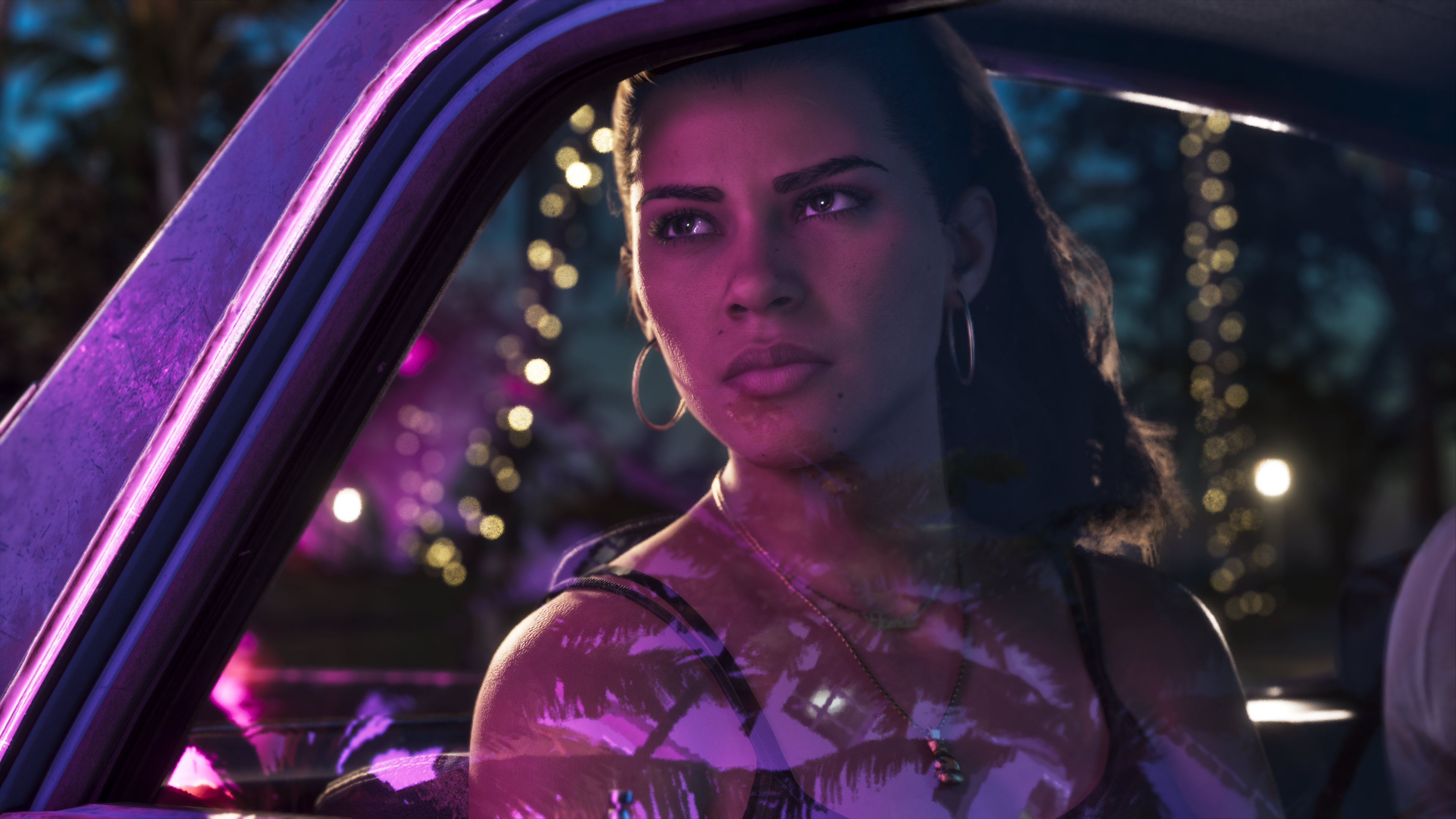
Famitsu: That’s reassuring (laughs). From here, I’d like to ask about the details of the game. First, regarding the protagonists Jason and Lucia, could you tell us what the two of them are trying to accomplish?
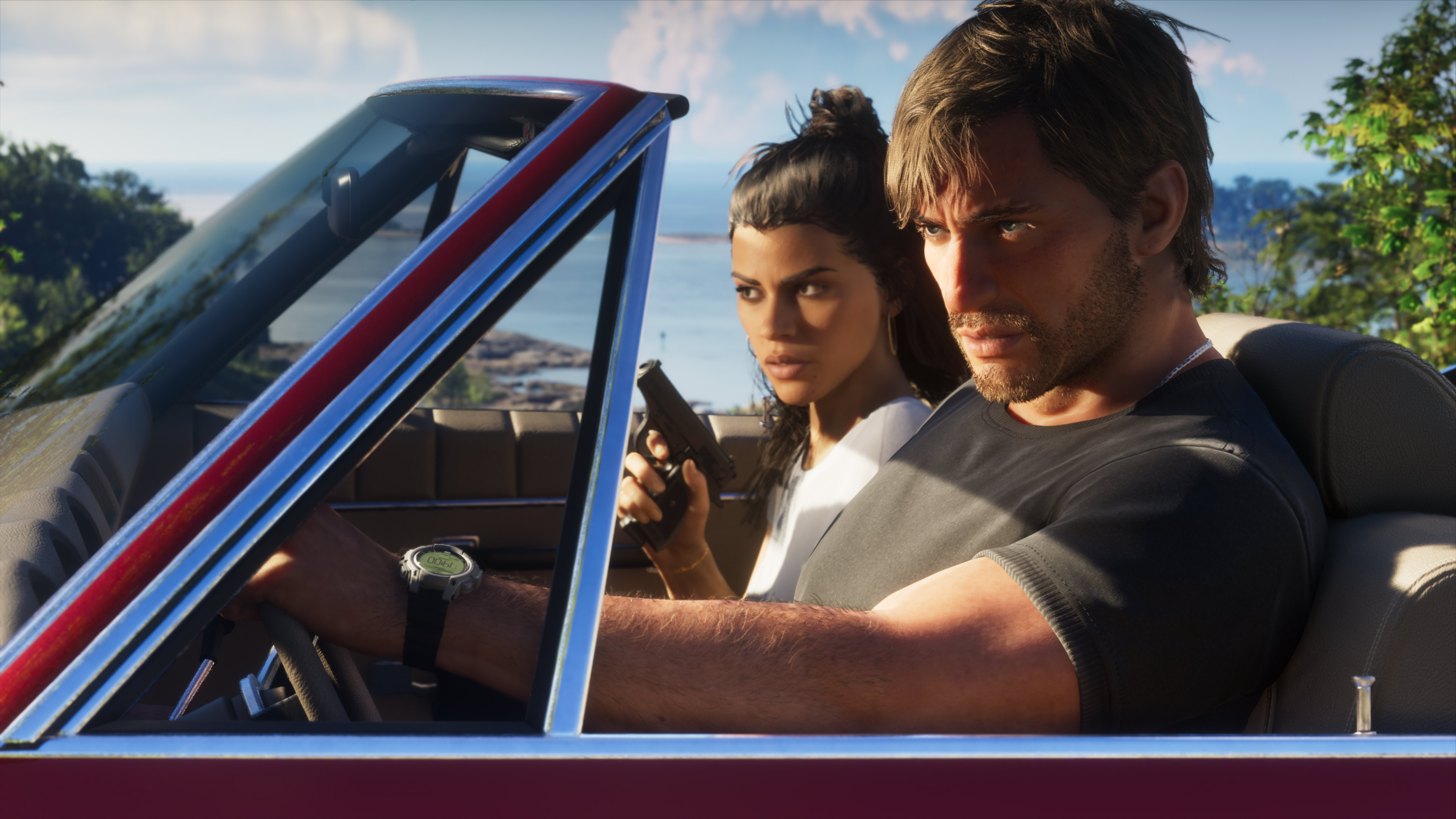
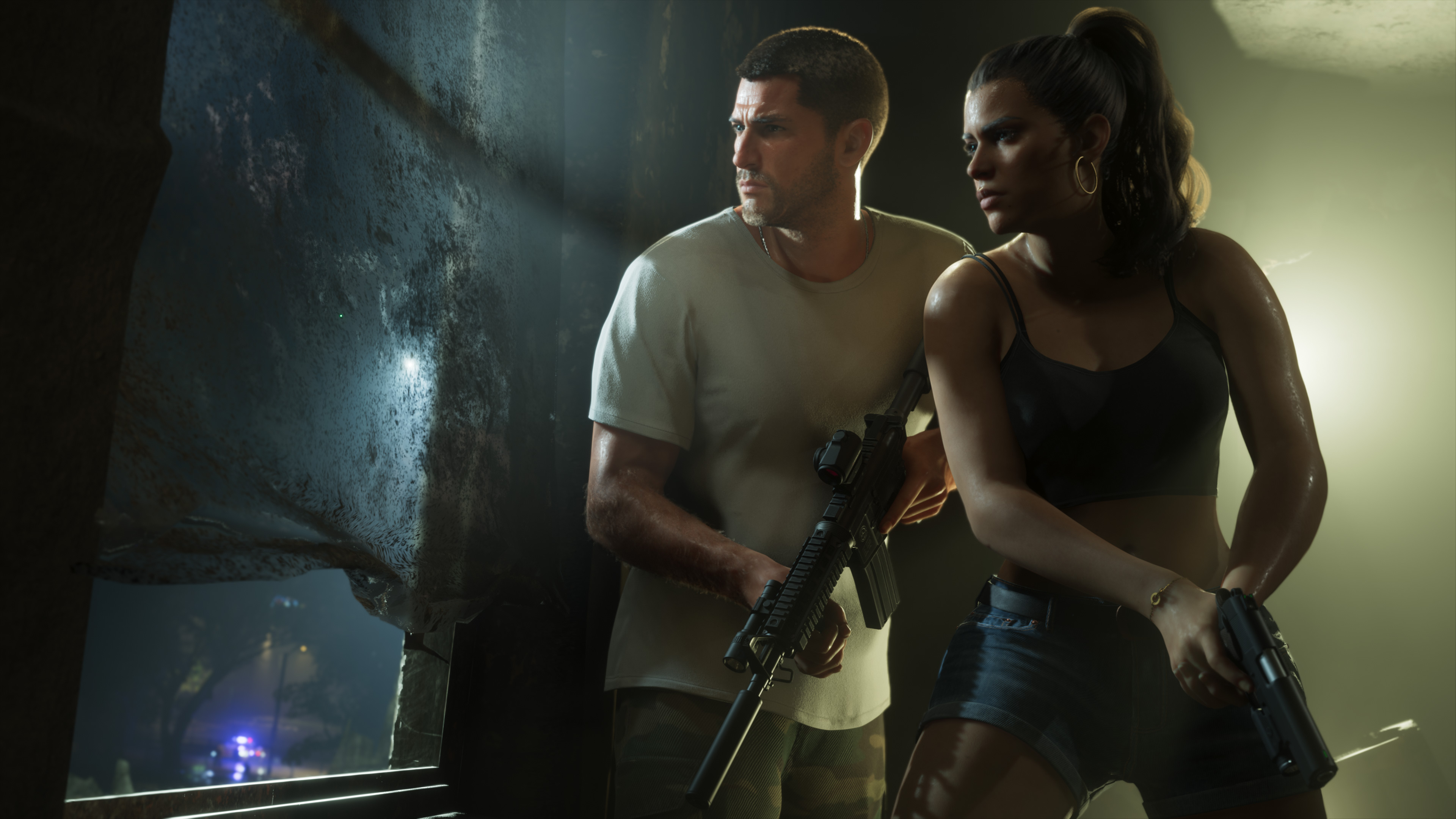
Rob: The two of them need money, and they become caught up in some trouble. A job that was supposed to be simple ends in complete disaster. As a result, they find themselves being pursued by various people.
What we’re showing you today is how the two of them live while blending into the streets of Vice City and keeping themselves hidden. They’re discussing how they can make the money they need to get out of this situation, and if possible, they’re even considering leaving the city. At the very least, they want to do something about the people pursuing them.
Players will experience the journey of these two, and it will lead them into all kinds of strange and outrageous situations. Will Jason and Lucia work together? What kind of outcome will they reach? Those things are left in the player’s hands. The player’s decisions affect everything... you have the major responsibility of determining the fate of these two.
Famitsu: Was the reason for having two protagonists that you wanted Jason and Lucia’s relationship as human beings to be one of the elements players enjoy about the game?
Rob: After featuring three characters in GTA V, we thought about all sorts of possibilities for what we could do next. We even considered things like, “What if we increased it to four protagonists?” But we thought that if we increased the number, players would spend less time with each individual character, which might make it more difficult to become emotionally invested in them.
When we worked on RDR2 after GTA V, we were concerned that having Arthur as the sole protagonist might feel strange to players. But in reality, the result was that many players became deeply emotionally invested in Arthur.
I think a major reason for that was that players were able to influence Arthur’s story, particularly through choices and the Honor system.
So how could we bring that same kind of strong emotional investment to GTA? What if the protagonists were a couple? If we pursued that idea, what kind of story would it become?
This game is the story of Jason and Lucia, but at the same time, it is also the story of the relationship between two human beings.
Players can increase their Honor level — becoming a “good person” — by doing things such as donating or completing chores at camp, helping people in trouble, or capturing bounty targets alive, which provides benefits such as being able to purchase goods more cheaply from merchants. Conversely, killing civilians or livestock or stealing from other people lowers the player’s Honor level — making them a “bad person” — and causes civilians and law enforcement to become wary of them.
Rob: So how do you turn that story into a game? How do we get players emotionally invested in these two? First of all, we as developers have to care about Jason and Lucia ourselves. And we want players to care about their relationship in the same way we do — in a way that GTA has never done before.
It’s because we continue thinking through things like this that every entry in the GTA series is different. The character configurations and themes differ from game to game. This time, we decided that the timing, technology, team structure and everything else were finally in place for us to take on themes that we hadn’t tackled before.
Famitsu: Does Jason and Lucia’s relationship change during the game? If it can deteriorate, can that also affect the game?
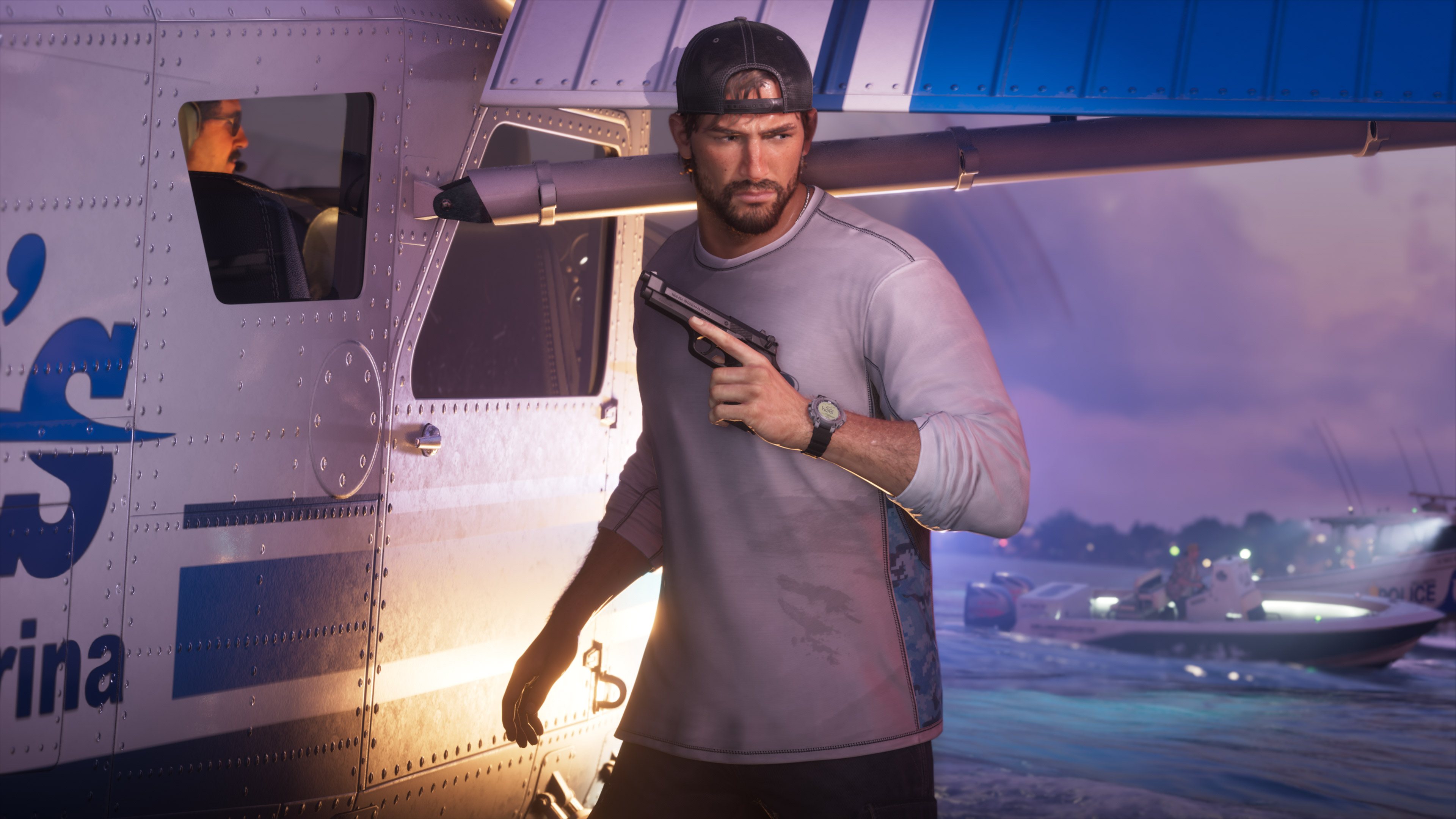
Rob: That’s something we’ve put a great deal of effort into. We’ve structured the story so that, in most of the situations they encounter, the two of them have to work together. But whether they go through those situations together as a couple or simply as accomplices is up to the player.
You’ll essentially be choosing between “We’re not a couple, but let’s work together to get through this” and “Let’s get through this together as a couple.” How much effort you put into building their relationship is left up to the player.
Some people probably won’t want to engage much with that kind of relationship, and there’s no problem with progressing that way. In that case, rather than being lovers, the two will progress through the story simply as partners in the sense of being collaborators. However, the depth of their relationship also changes the range of things they can do together. If you don’t deepen the relationship, you lose options such as holding hands or kissing. But by putting in the effort, you can restore that relationship.
You can check a status representing their relationship with each other, as well as their bank balance, within the game. Just like a real human relationship, you have to put effort into maintaining a good relationship.
The Character-Switching System
Famitsu: You showed us Jason and Lucia’s hideout, and things like the furniture, the walls and the audio coming from the television really create a convincing sense of everyday life. That’s something you’re very good at.
Rob: We’ll also show you them having their morning coffee. This is an extremely small detail, but inside the house you can’t just throw things like mugs down wherever you want. It’s a space where the two of them live, so you have to carry a mug to somewhere it can properly be placed. You can’t put it directly on the floor; you have to take it somewhere appropriate and put it down.
Famitsu: If they’re living together as a couple, I suppose it’s important to keep things tidy (laughs). Also, the animation when Jason gets into bed is incredibly realistic. He properly pulls back the covers next to the sleeping Lucia and sluggishly climbs into bed.
Rob: I think this might be the first game to implement bed covers! (laughs)
Actually, even that was difficult. Because these two are a couple, we thought it was quite important to portray them sleeping together in the same bed, and the development team did a fantastic job with it.
Both of them have things they do every day around the hideout, and whichever character you aren’t controlling follows their own schedule. You can switch control to either of them, and you can also bring the two of them together.
Famitsu: Are there restrictions on switching characters? Can you switch whenever and wherever you want?
Rob: There are times when it’s restricted depending on the progression of the story. In other words, for story reasons there are situations where only one of them can be controlled. In some missions you can switch freely, but just like GTA V, when we want you to experience a scene from the perspective of a particular character, we restrict switching.
There’s a mission where you have to make your way through a high-rise housing complex. Previously, we allowed players to switch freely, but we decided that it felt more natural to control Jason, who is former special forces, in order to get through that situation, so we locked the character. This mission is also early in the game, and we felt that in a situation where the two of them need to get through it together, it would feel unnatural for Lucia to take the lead and issue instructions.
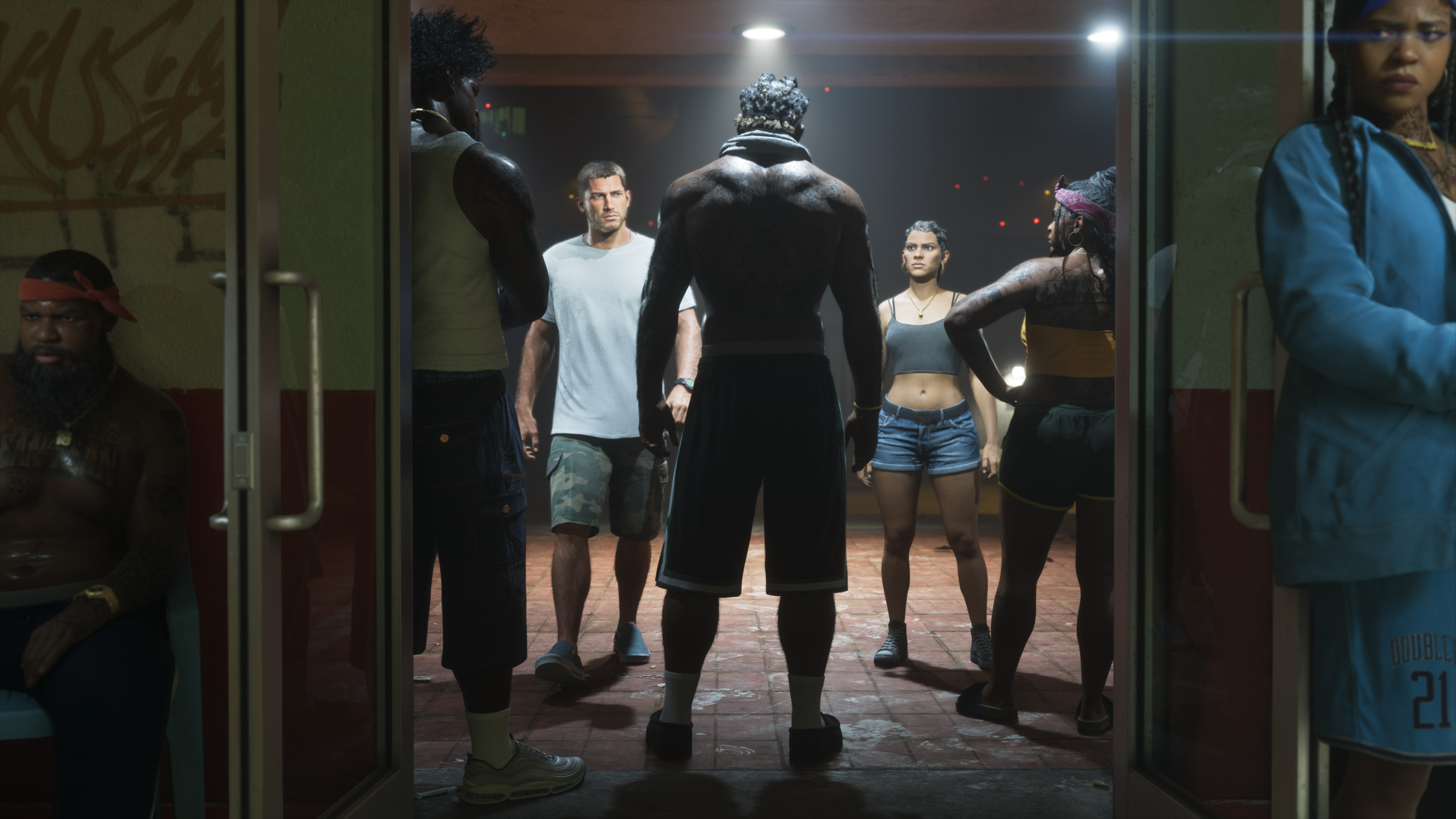
Rob: There are also cases where the character you control is switched automatically. In the footage, we showed you a mission where the two encounter a bank robbery and end up driving a car. You initially control Jason, firing at the pursuing police vehicles from inside the car while Lucia drives. During the mission, control switches, and the player then drives the car as Lucia while Jason and Raul, who are in the back seat, shoot at the police.
There are missions designed like that, while others — such as the mission shown at the end of the footage where they come under attack — allow you to alternate between controlling Jason and Lucia.
Famitsu: There was also a scene where they rob a convenience store attached to a gas station. Is that a fixed mission, or is it a free-form mission?
Rob: Both. You can rob it alone. Or you can invite Lucia and have her come along.
This applies to the game as a whole, but the hideouts in this title are vastly more complex than the hideouts in previous GTA games. Jason and Lucia move around an extremely large map. What we showed you this time was only a very small area.
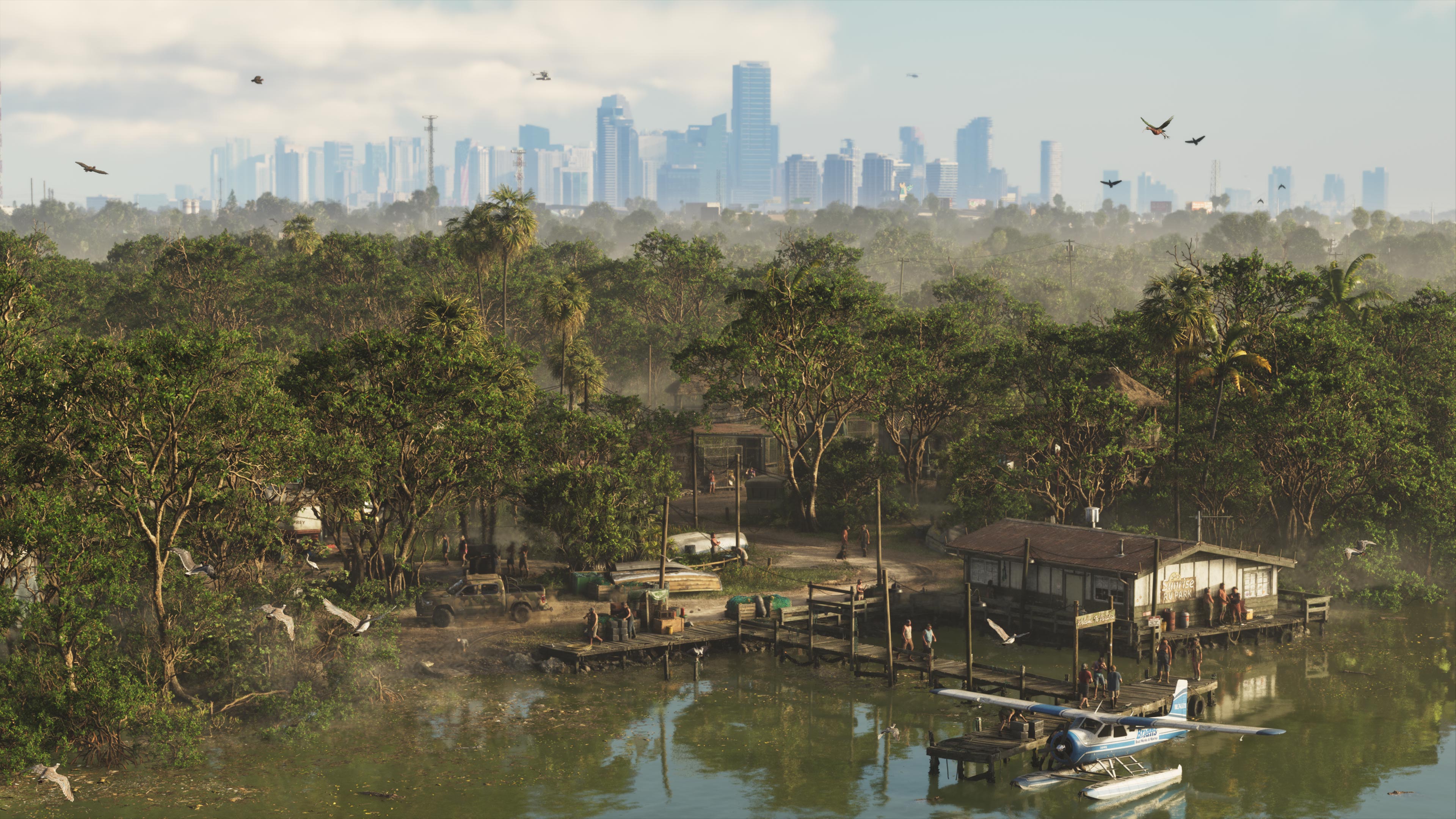
The story begins in the Leonida Keys. We have a nice 3D map, and Jason’s first house, which appeared in the trailer, is here. When you unlock new areas, they’re filled in on the map. Just like GTA V and RDR2, unexplored areas of the GTA VI map are hidden and become visible when you actually visit them.
Famitsu: Does the interior of the hideout change depending on your financial situation, such as how much money you have?
Rob: To some extent, it changes depending on the progression of the story. But as the story progresses, you move between different hideouts. To repeat myself, this game makes use of everything we’ve learned from our previous titles.
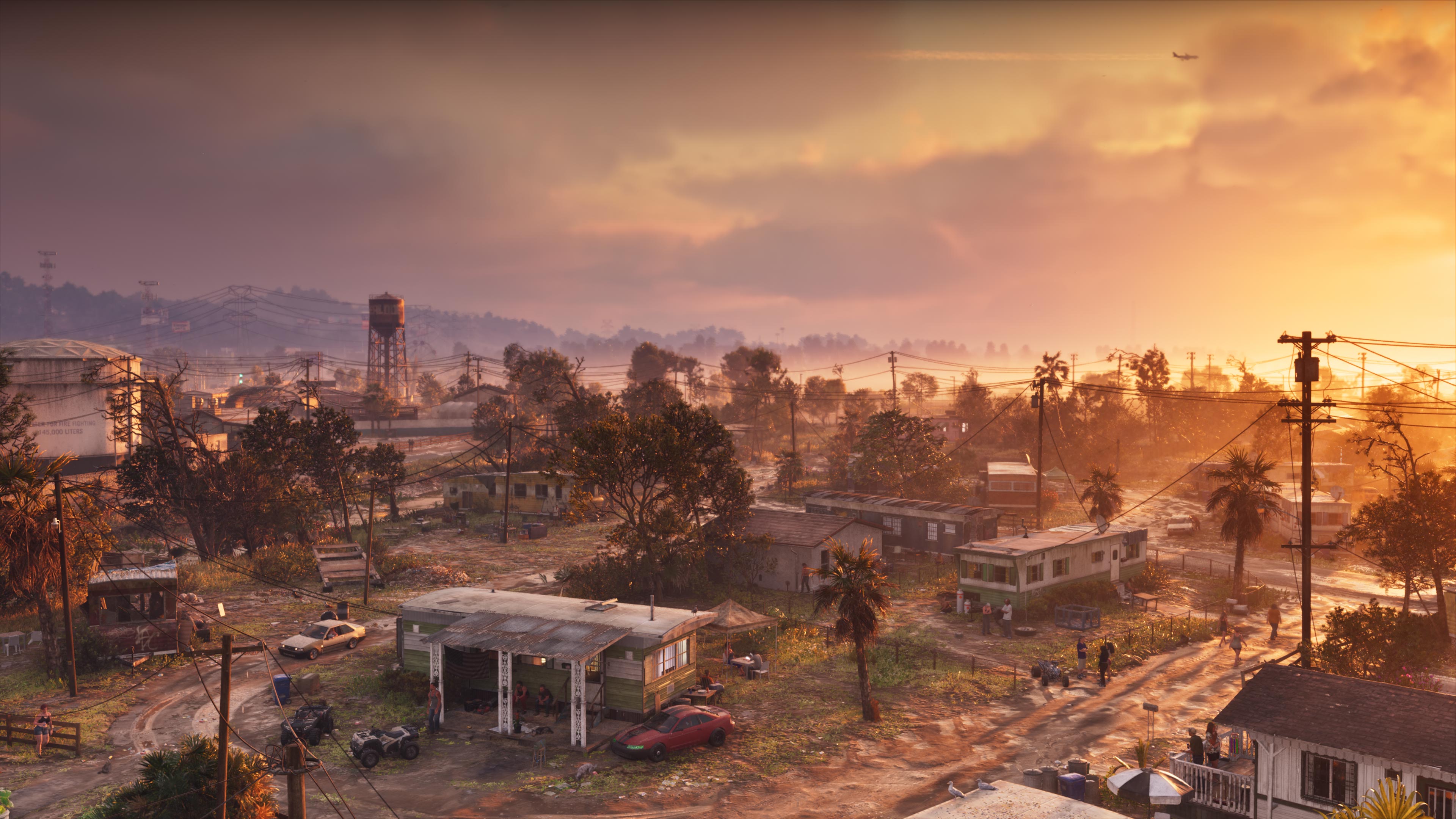
The story progresses chapter by chapter, and the characters’ hideouts also change as it progresses. You could say it’s similar to the camps in RDR2. Everyone living there has their own daily schedule, and within that you can enjoy the feeling of actually living there — the kind of feeling we achieved with the camps in RDR2.
Role-Playing Is Deepened Even Further Through Gym Workouts
Famitsu: There was one thing about the hideout that caught my attention. When Jason opened the refrigerator, it was packed full. If you actually purchase food and drinks, does the amount inside increase accordingly?
Rob: At one point during development, we experimented with a system where you could buy groceries and restock the refrigerator. You could purchase groceries at a store, bring them home and replenish the fridge. But that made the system too complicated, so we had to simplify it.
We’re always searching for exactly the right balance between realism and ease of play. We went through the same kind of trial and error with RDR2, trying to find that perfect balance between realism and player convenience.
At the same time, we didn’t want actions like simply opening the refrigerator and having a snack, or going to a restaurant, to remain nothing more than role-playing. We wanted those actions to have meaning.
In this game, we track statistics including your health level, cardio level and fitness level, and you can make your character muscular or have them eat a lot and become overweight. As part of that, players can work out at gyms. You have to control the workouts properly, and they’re responsive and make for quite a substantial minigame.
While working out, your stamina decreases as you continue moving, and you have to complete the set before your stamina runs out. If you move too quickly, you put additional strain on your body, so balance is important. It feels pretty interesting to play.
There are three exercises you need to do that day, and when you finish, you rest. If you do this for three days in a row, the protagonist’s health and strength will level up. You can use most of the equipment in the gym, including doing things like pull-ups. Once you’ve finished training, round things off with a protein shake and a protein bar.
Famitsu: That really is realistic (laughs). Does what you eat affect the character’s stats?
Rob: Yes. Food provides buffs that strengthen your meters. If your health falls below its normal maximum, you lose the additional amount provided by the buff and won’t recover beyond that point. For example, you can strengthen your stamina meter by drinking an energy drink.
Your base stamina and health values can also be increased through training.
A Revamped Wanted System and a New “Profile” System
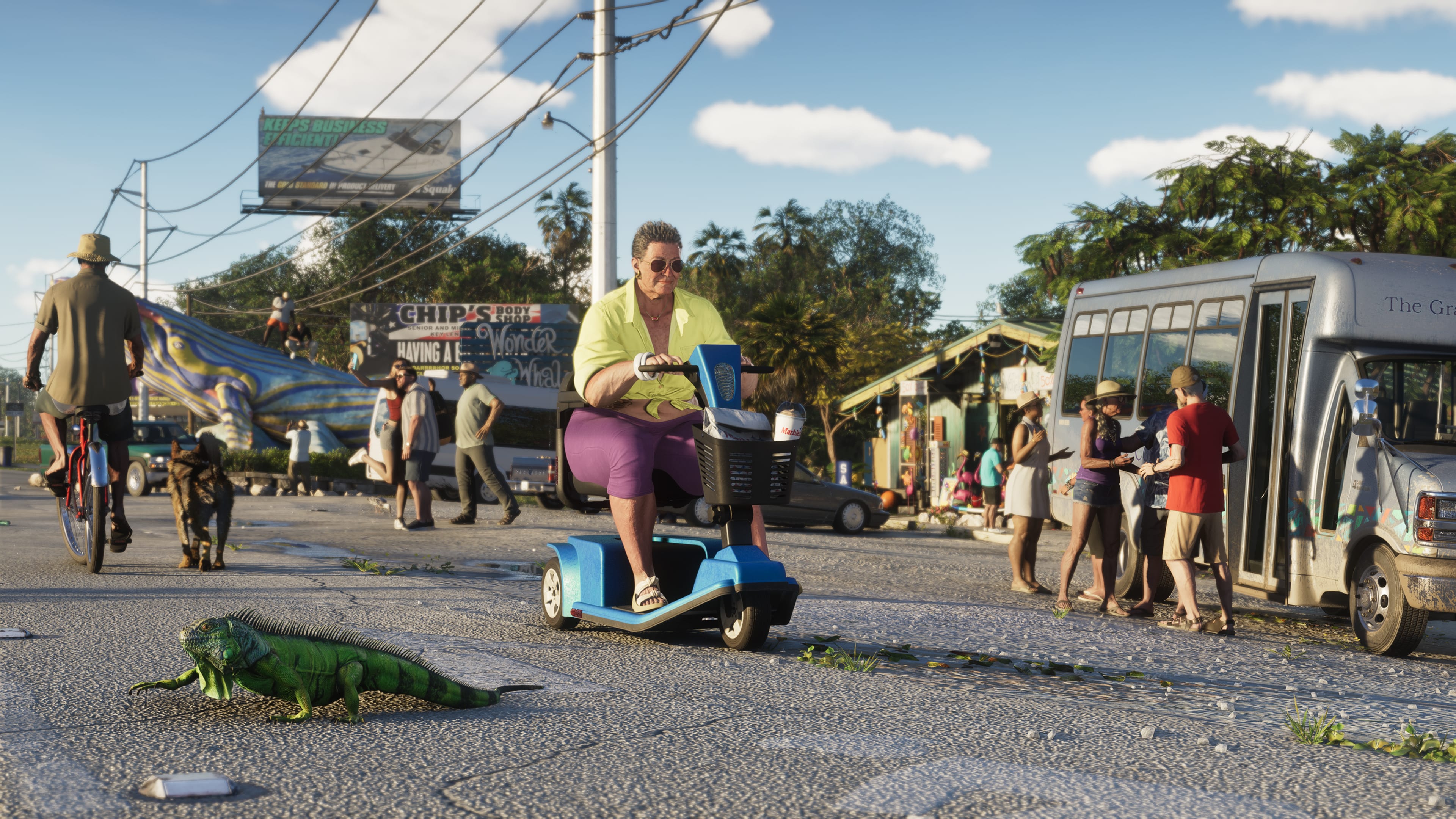
Famitsu: Pedestrians and vehicles, of course, but even birds flying through the sky — there always seems to be something moving on screen.
Rob: Yes. Something is always happening in this world.
Famitsu: And does the weather change as it has in previous games?
Rob: Of course.
Famitsu: I felt the development team had also put a great deal of effort into the lighting — such as the intense sunlight and lighting in dark areas — as well as environmental audio and sound effects.
Rob: Yes. Everyone gave it everything they had. Every team has been giving it their all for years.
Famitsu: Music coming from stores, pedestrians talking, car horns and sirens — even just walking down the street, you’re always hearing something. I think one of the biggest differences between cities in Japan and overseas is what you hear around you, and that has been recreated brilliantly. The people moving through those spaces also aren’t all behaving in the same way, so there’s an incredible feeling that they genuinely live there.
Rob: We’ve also put a lot of effort into the number and variety of pedestrians. For the first time, we’ve taken differences in height and body build into consideration. In previous games, we only had around two variations in height.
In this game there’s a huge variety in character height and body shape, so the people in the world feel even more individual.
Famitsu: Does that mean you’re less likely to encounter pedestrians using the same model?
Rob: It’s more that it’s closer to reality. Even in real life, you routinely pass the same people. But we’ve made sure you don’t obviously keep encountering exactly the same faces over and over again.
Famitsu: Watching the gameplay, I got the impression that in this game, even when you commit crimes, your Wanted Level stars don’t immediately increase.
Rob: It depends on the nature and severity of what you’ve done, but the stars don’t increase easily. We’re very careful when deciding how many stars should be assigned for the player’s actions, and we’re conscious of not making the assessment too harsh.
We’ve also completely overhauled the Wanted system. In previous GTA games, it could feel as though you automatically became wanted whenever you committed a crime, even if nobody had witnessed it. In RDR2, you don’t become wanted unless somebody sees you, and we’ve brought that system into this game as well.
Also, in this game you have your own bank account in addition to the cash you’re carrying. There’s a risk of losing cash if you end up “Wasted” or “Busted,” and if you cause trouble and are taken down by the police or civilians, you lose all the cash you’re carrying, so you’re better off depositing it somewhere safe.
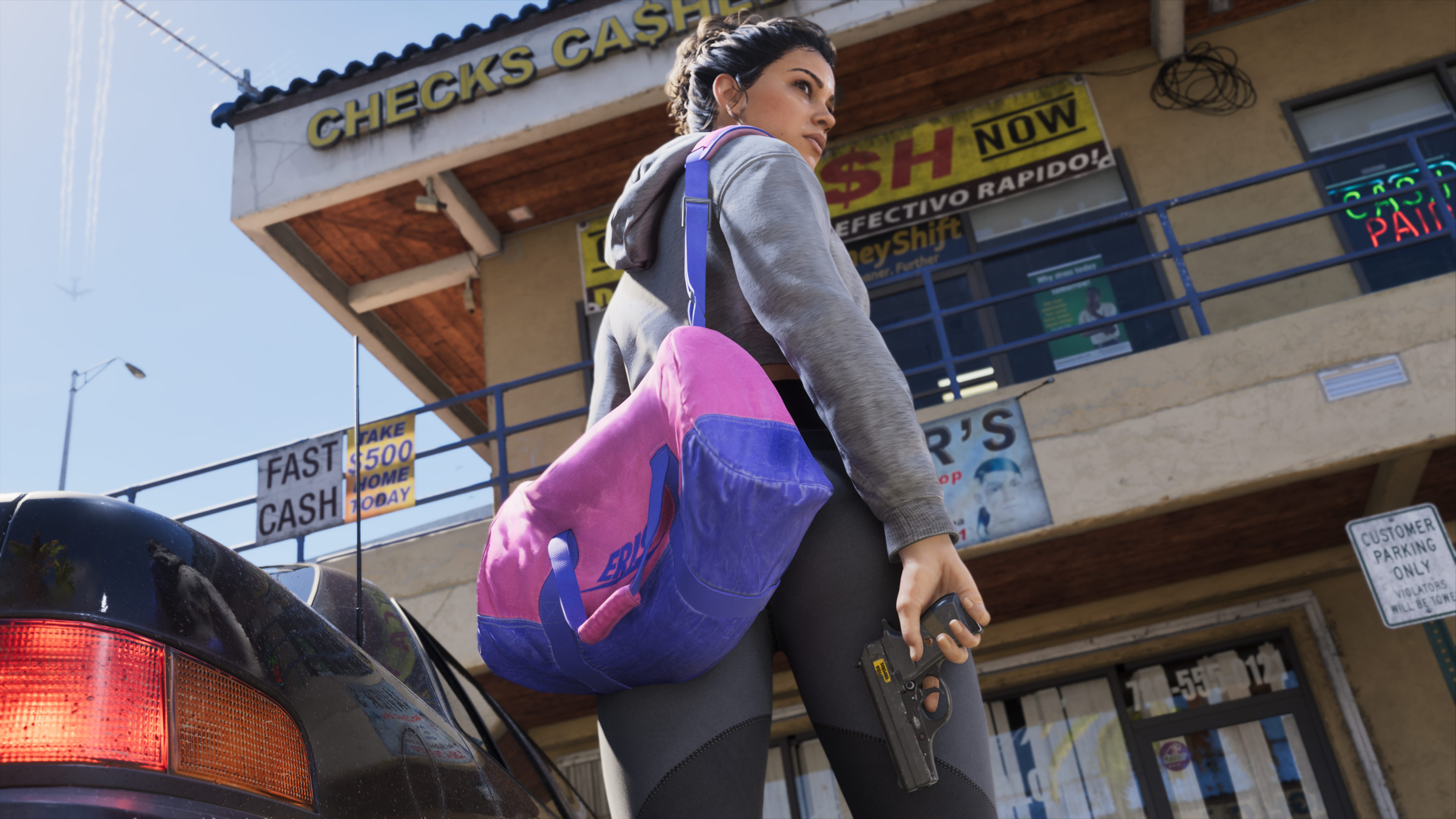
Rob: In terms of role-playing, for the first time in the GTA series we’ve introduced a system that tracks some of the player’s actions. That’s the “Criminal Profile.” It has some things in common with RDR2’s Honor system, but there are also differences.
This is the world of Grand Theft Auto. We don’t want players to think, “I have to behave like a good person,” and if you want to behave like a bad person, you can. That said, if you commit too many crimes and go too wild, it may have some kind of effect on the story or characters.
Famitsu: If you behave like a good person, what kind of effect does that have on the game?
Rob: In RDR2, your Honor level has effects such as changing the discount you receive in stores, but that’s a very game-like mechanic, so we haven’t adopted that system this time.
The system in GTA VI evaluates what kind of criminal the player is — whether you’re more of a professional criminal, or whether you’re violent and dangerous. That assessment determines whether the people around you and the world respond aggressively. What you do comes back to you. It’s that kind of world, so the more aggressive you are, the more aggressive those around you become.
For example, when robbing a jewelry store, even if you end up shooting somebody, if you handle the situation well and escape quickly, you can move closer toward a “good person” style of play. Conversely, if you take an aggressive attitude or act aggressively toward the police and others, they’ll quickly change their attitude and respond aggressively as well. The player’s actions affect how the world around them responds.
Famitsu: When playing games that have systems like Honor or assessments of good and evil, you tend to worry that doing something bad might cause you to miss something. There’s a strong tendency to think, “I don’t want to miss any of the game’s content, so I’ll play as a good person.” What do you think about that?
Rob: Whether you play in a good or bad style, there will inevitably be things you miss. But we don’t want to punish players for being bad.
With this system, which is being introduced in GTA for the first time, we want players to enjoy playing in all sorts of different ways. I think what people want from this game will differ from person to person. There’s no such thing as the “correct way to play,” and we’ve worked hard to avoid telling people how they should play.
Famitsu: While some games deliberately narrow the player’s choices, GTA VI presents more choices and is more complex, both in terms of its systems and for the player making decisions. I got the impression you did that to give players an even stronger sense that they’re “living in another world.”
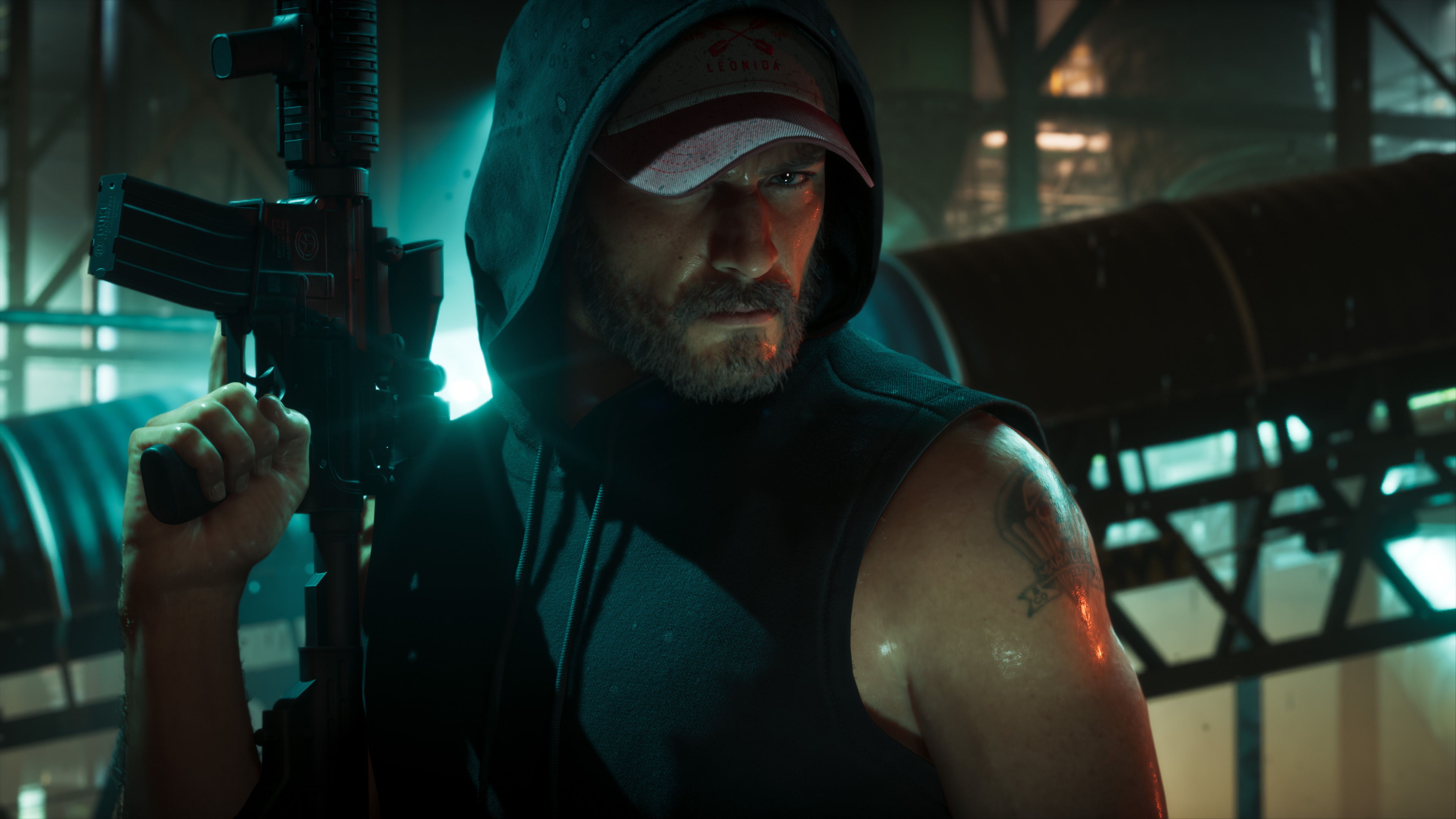
Rob: GTA VI far surpasses our previous titles not only in the scale of its world, but also in how deeply you can immerse yourself in it. The places you can go, the things you can interact with, and how you approach them — every element deepens the connection between the player and the characters in this world.
It’s more complex than any of our previous games, but that doesn’t mean you have to play according to somebody else’s method. There are many ways to complete this game, and you can enjoy it without immersing yourself in all of the complex systems. I hope people who love losing themselves in a game world enjoy that depth. If you want to enjoy it in a more straightforward way, such as simply going on a rampage, of course you can do that too.
Even Vehicle Theft Has a Wide Variety of New Features
Rob: There are many other new features in this game as well. For example, you can scan a vehicle and immediately check its model and value. You can also check in advance how much it would cost to register it at Pay ’n’ Spray and make it your own.
We’ve also introduced progression tiers for vehicles. Some can have their doors forced open with lock-picking tools, while others require a key cloner — a device that duplicates electronic key data — which you obtain later in the game. You can’t steal every car from the beginning; the player has to progress through the tiers.
If the car you’re trying to steal is a luxury vehicle, you’ll need the key cloner. There’s also a high probability that it will have an alarm and a sophisticated tracker. Even if you manage to steal it, while you’re driving slowly for a while, the tracker may transmit a signal and allow the police to determine your location.
For older cars, lock-picking tools are enough, but with newer or luxury vehicles, you have to clone the key to avoid triggering the alarm. You also need to be careful because breaking a window will set the alarm off.
Some vehicles can’t be sold immediately. You’ll have to abandon those along the way, but eventually you’ll encounter vehicle fences who can remove trackers like these. As I mentioned earlier, this kind of tiered system applies to all vehicles, so you have to go through several stages before you can steal and sell luxury cars.
Famitsu: So you can’t simply steal anything you want right from the beginning. In the gameplay, you were being pursued by the police, and because it was a car you couldn’t sell yet, you got out and abandoned it. The police arrived at the scene almost immediately.
Rob: We watched them from a distance with binoculars, and they headed straight toward the car. The player can decide that if they rush back to the scene, the police might speak to them, so it’s better to simply leave.
There are also cars that aren’t quite as expensive, which might have an alarm but only a standard tracker. If you find a vehicle that a car fence named Randy wants, you can steal it and deliver it to him. The owner will probably be angry when their car gets stolen, though...
Even if you find one, you can’t steal cars at places such as your friends’ clubs. The areas around hideouts, which I’ll discuss later, function as safe zones, and certain story-related locations are also designated as protected areas. There’s a scene where Jason goes to a strip club with a friend, but because it’s the club of Jason’s friend Dre’Quan, you can’t steal cars outside his club. It wouldn’t be good for business.

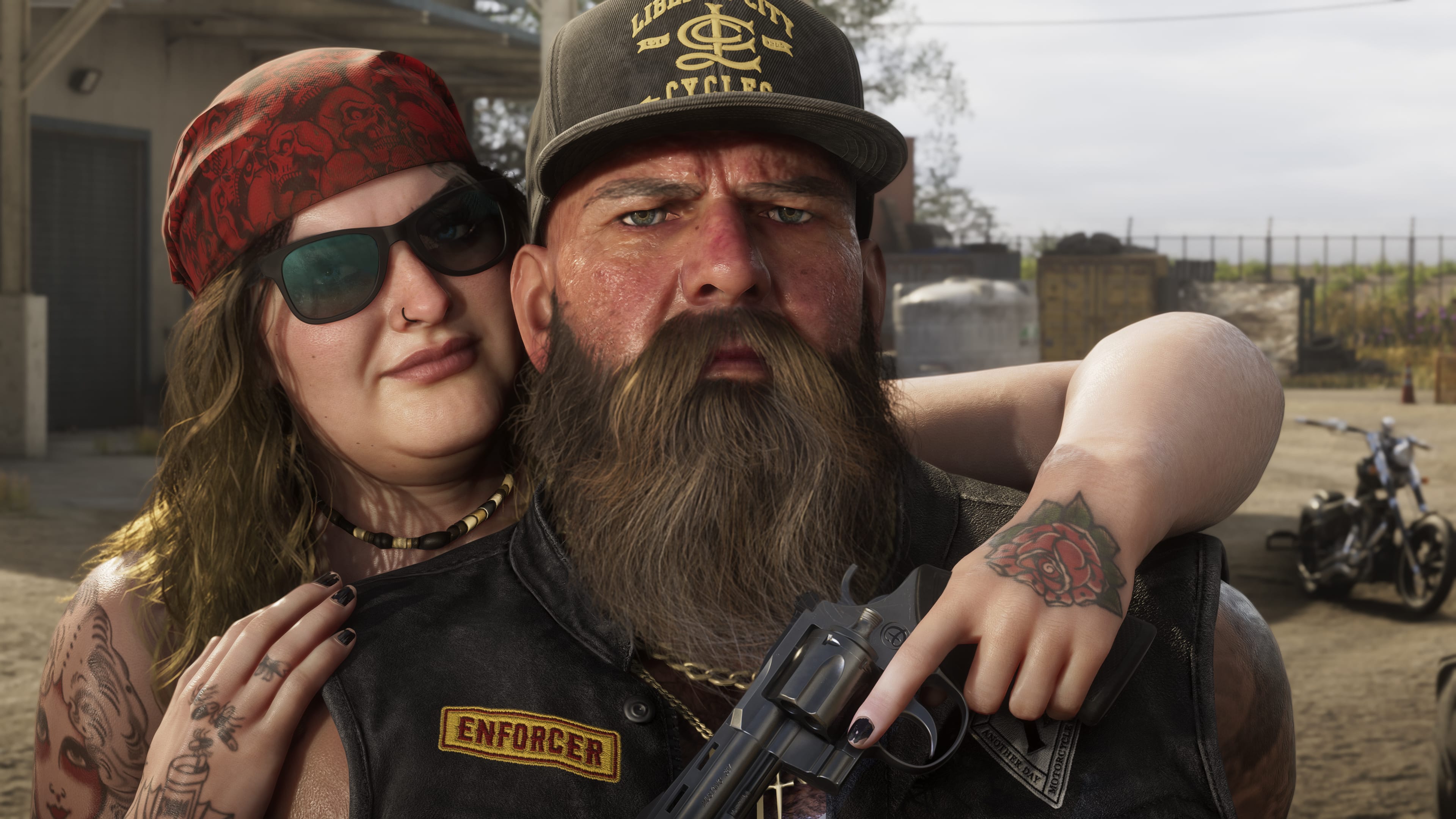
Rob: There’s another important point. The residents of Leonida aren’t all submissive. This is something we began focusing on with RDR2, and we’ve developed it even further in this game.
In previous GTA games, the player was an extremely powerful presence who could behave almost like a god in the open world. Outside of the police, you were essentially the only person carrying a gun, you could do whatever you wanted, and the people around you would simply fear you and run away. This world is different. It’s extremely dangerous. Other people may be armed, and sometimes they’ll fight back against the player. For people who want to play cautiously, that will create a unique sense of tension.
When stealing a car being driven by an NPC, there are times when you won’t need to punch the owner or drag them out — you can simply shout at them to get out of the car. But sometimes that won’t work. They may even shoot at you.
At that point, the player can choose whether to shoot back or give up and run away. If you shoot back, it affects your Criminal Profile. Of course, you can also choose the traditional approach.
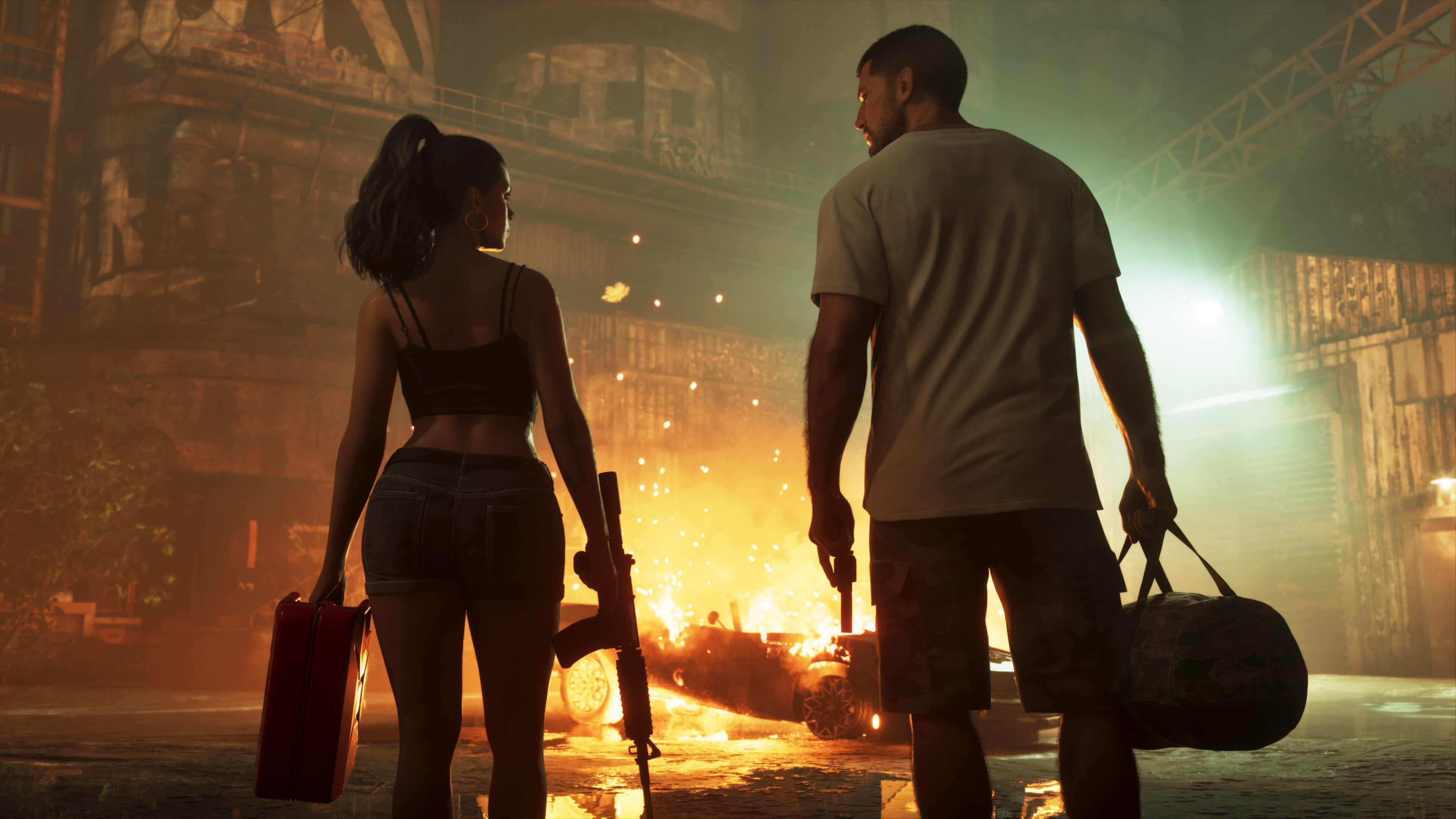
Rob: If you successfully steal the car, you can check its sale value at Pay ’n’ Spray and decide whether it’s worth taking it to a fence to sell. However, in some cases, the NPC may report to the police that their car has been stolen. If you hear police dispatch say, “The suspect is fleeing in the vehicle in question,” you’re in trouble.
They still don’t know your exact location, but an investigation begins based on information such as your clothes, appearance and the vehicle you’re driving. We call this state “Heat.” If you get out of the car, the relevant icon disappears, but if they’ve also been told that you’re carrying a weapon, you may still remain a suspicious person under police investigation.
If you throw away the weapon you were carrying during the robbery, you can lower the level of suspicion at the cost of losing it. If your clothing and appearance are also known, you can escape the Heat by taking clothes off. If you change clothes in a clothing store and disguise yourself, you no longer match the information from the report and can safely escape.
The police search the Heat Area, which is the area covered by the Heat, and as long as you remain inside it, the Heat won’t disappear. But if you can get outside the Heat Area, the pursuing police disappear. Leaving the area entirely is therefore one method of escape. However, you still can’t relax simply because the police have left the scene. If you get into a vehicle that has already been identified, there’s still a risk of being spotted by police.
Famitsu: Come to think of it, we also saw traffic jams, which we haven’t really seen in previous GTA games.
Rob: The roads in this game are narrower and closer to the width of real-world roads, and there’s also more traffic. There will be more situations that demand driving skill, but I think players will enjoy that realism as well.
Of course, you can ignore traffic jams and drive recklessly. However, damaging a car reduces its value, so if you want to sell it for as much as possible, I recommend driving carefully so you can deliver it in good condition. Even after you sell a car, you can’t bring another vehicle to the same Pay ’n’ Spray for a while. If you want to sell another car quickly, you’ll need to find a different Pay ’n’ Spray.
At Pay ’n’ Spray, you can repair cars and repaint them to escape Heat. However, you can basically only change the color there, so if you want an elaborate paint job, you’ll need to take it to a tuning shop. You can also register a stolen car as your own vehicle, but early in the game you only have storage space for three vehicles. By purchasing garages around the map, you can own more vehicles.
Swapping cars in your garage is a little like managing horses in RDR2. If you’re storing three cars and want to make a new car your personal vehicle, you’ll have to sell one to make space. Once a vehicle becomes your personal vehicle, you can also store your weapons inside it.
Stolen vehicles appear on the radar with a gray icon. They don’t belong to you, but they’ll remain there for a while. They disappear when you restart the game, though. If you’ve played RDR2, you may know that there are horses you own and horses you steal and temporarily make your own. The latter remain with you for a while but eventually disappear. We’ve introduced a similar system for vehicles in this game.
You can store guns not only in your personal vehicle but in the trunk of any car, and you can also simply discard them. Guns you own are always stored either in the trunk of your personal vehicle or in the armory at Ammu-Nation, so even if you discard one on the spot, you won’t permanently lose it.
Ammu-Nation also sells special guns exclusive to particular stores. There’s a very wide variety. There are also more weapon customization options than ever before.
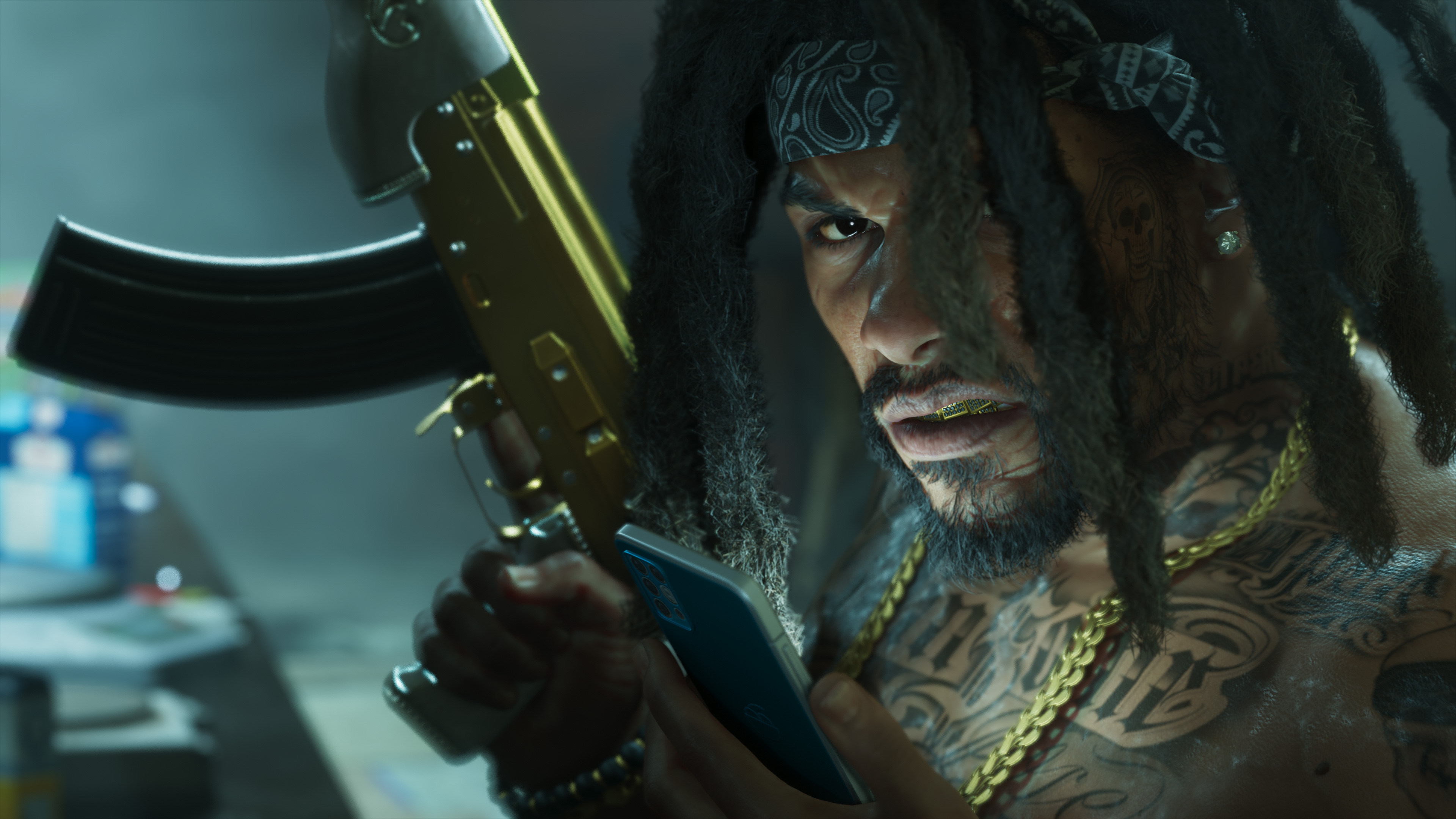
You Can’t Conceal Large Guns!?
Famitsu: Something caught my attention in the scene where you were walking around carrying a weapon. You can’t conceal large firearms such as rifles, can you?
Rob: Long guns are no longer treated as “invisible.” To manage long guns, you need to go to Ammu-Nation and use the locker. Every Ammu-Nation has one, and you can retrieve your guns there. You can also store them in your personal vehicle and take out the equipment you need.
You can have your vehicle delivered to wherever you are, so I don’t think it will feel inconvenient. You can also put a gun in the trunk of a stolen car and keep it there for as long as you retain that vehicle.
Famitsu: It looked like pedestrians reacted differently when you walked around while holding a gun...
Rob: If you walk around with a gun drawn, people won’t like it. It’s only natural that people will avoid you if you’re carrying a gun. They won’t panic just because you’re walking around with one, but they may dislike it and leave, or react aggressively toward you. People move away because they’ve noticed the gun and are wary of you.
That said, if you’re simply carrying one long gun, people around you won’t care that much, so walking around won’t cause a commotion. They react when you have the gun in your hands.
For the first time in this game, you can no longer conceal weapons. We thought very carefully before making that decision. One of the defining features of previous GTA games was being able to pull a shotgun or rocket launcher out of nowhere and cause complete chaos. We worried that removing that might take away some of what makes GTA fun. But we came to believe that giving players more choices and more opportunities to make decisions would actually make it more enjoyable.
When you consider the realism and credibility of the world we’re trying to create, something like walking through the city in GTA V holding a carbine rifle while nobody reacts is actually unnatural. In GTA V, people only start running away once you point a gun at them, but in a world emphasizing realism, that feels extremely unnatural. What would actually happen if you walked around the streets holding a weapon like that? Everyone would leave the area, and the police would stop you. That’s the atmosphere we wanted to recreate.
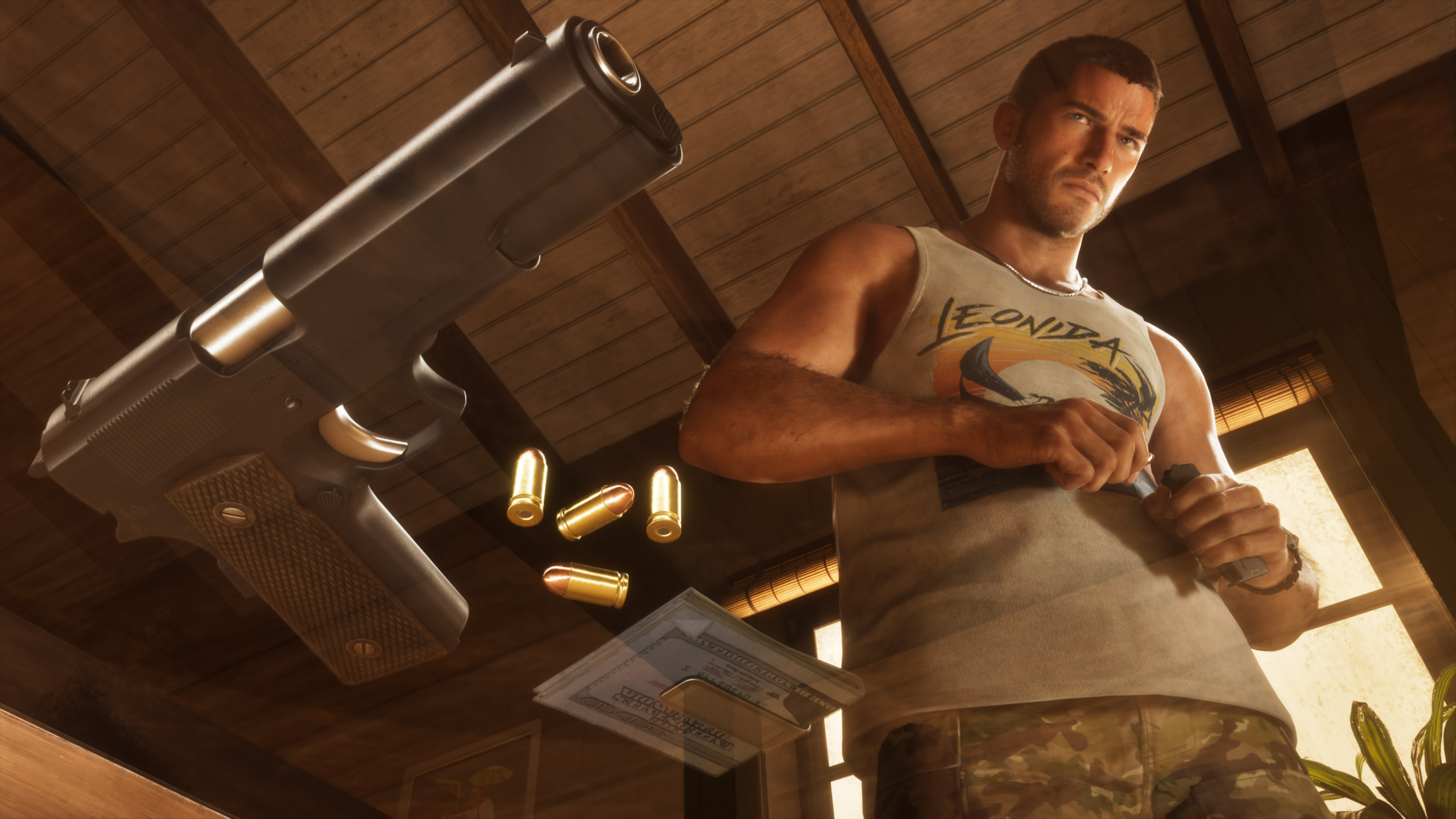
Rob: Walking around the city with a gun comes with consequences, so if you’re going to behave that way, you need to have some kind of purpose for doing it. We thought that was better both from a development standpoint and for the game itself.
This game is the story of a couple who are being pursued and are trying to stay hidden. So openly walking around the city with a gun drawn doesn’t make sense. Of course, that doesn’t mean you can’t do it — but the people around you will react.
Famitsu: That’s another example demonstrating how much more emphasis this game places on the player’s actions affecting the game world.
Rob: Exactly.
Famitsu: It seems that earning money is more important in this game. Aside from stealing cars, are there any specific ways to make money?
Rob: Stealing and selling cars is one way to make money, and robbing stores is another. If you’re near a store and somebody sees you preparing to storm inside with a gun, a helpful passerby may report you to the police. Even after you’ve finished and try to leave, the police may already be waiting for you.
Here’s a new feature: suppressive fire. Rather than shooting somebody directly, you can deliberately miss and fire near them to frighten or confuse them, buying yourself time to escape. The idea is to give players an option to avoid killing police officers or civilians while escaping.
In other words, you can keep them pinned down while making your escape, and this also fits the story of a couple on the run. Given their situation, it wouldn’t make sense for them to stand there having a shootout unless they were cornered and had no choice but to fire. Of course, you can fight if you want, but it will affect your Criminal Profile, and the police in this game are pretty formidable.
If your Wanted Level is around two stars, it’s entirely possible to escape. For example, let’s say you were wearing a mask when you were reported. The police are searching for a masked person, so removing the mask reduces the degree to which the police recognize you.
Then you put your gun away, watch what the police are doing, and steal an old beat-up car. They know what clothes you’re wearing, but they don’t know that car, so if you drive carefully, you may be able to escape without being noticed. But if you get out of the car and stand around without changing clothes, they may recognize you from your clothing, so you need to be careful. If you behave with restraint, it’s possible to escape without killing anyone.
Let me show you a store robbery. We approach through the back entrance so we won’t be spotted, but kicking the door down would trigger the alarm. We have a snap gun — a special lock-picking tool — so let’s sneak inside instead. Once inside, if you destroy the security cameras, nobody can see you. If you disable the security system, the alarm won’t go off either. In this way, you can quietly steal cash from the store register. If you simply leave afterward, nobody will know what happened there.
The map gives you access to various kinds of information, so you can check gang hideouts, sneak inside, and steal cash or drugs. The map can even tell you how much cash and how many drugs are being stored at a hideout, and you can take stolen drugs to a fence. You can also rob jewelry stores or small banks either alone or as a pair.
Incidentally, even without opening the map, you can hold down a button to set a destination, allowing you to move on quickly.
Places like jewelry stores have strong security, so you’re better off preparing properly. The police response is also severe, so once you’ve done what you came to do, get out quickly.
If the two of you commit a robbery and the police pursue you, the player can control Lucia and handle the driving while leaving the shooting to Jason. Lucia is also a very capable driver, so alternatively, you can let Lucia drive while the player controls Jason and handles the shooting.
If you were wearing masks, you can get out of the car, take them off and be safe. The two of you can go together to deliver the loot to the person who hired you for the robbery, but you can also send Lucia alone. You can even have Jason drive to the destination while the player, controlling Lucia, sits beside him checking her phone.
Famitsu: We also saw a scene where Jason shoots the tires of a police car while escaping. Does the location you damage — such as the front of the vehicle or the windows — affect the condition of the vehicle or the driver’s reaction?
Rob: Sometimes. It isn’t always easy, but there are many situations you can get through without killing anyone. In that scene, shooting the tires caused the police car to flip over, but none of the pursuing police officers died. You could aim at the officers and kill them directly, but Jason chose not to.
Famitsu: So that’s another choice available to the player. And even all of these things feel like only a small part of GTA VI as a whole.
Rob: That’s right. We can’t possibly introduce every element of the game in a short amount of time or through trailers alone.
A Modern-Day Story Incorporating Smartphones and Social Media
Famitsu: Regarding activities, I imagine there are many things to do beyond fishing and what has been shown in the videos. Do you have a particular favorite?
Rob: It’s difficult to choose one, but I like fishing. And we encountered that peacock along the way, didn’t we? That was the first time I’d seen that too (laughs). Impressive, isn’t it?
Famitsu: So there are even things you don’t know are going to happen, Rob (laughs). In previous GTA games, the player became the protagonist and could do whatever they wanted within that world. With GTA VI, it feels as though the aspect of truly becoming the protagonist has evolved further, and the experience has become more interactive.
Rob: Yes. We went over it again and again and put a huge amount of effort into it. And that is also the biggest reason we chose this couple as the protagonists.
These two have all kinds of backgrounds and histories, and each of them carries emotional baggage. Even so, there’s room for the player to empathize with them, and I think players will be able to form an even deeper attachment to them than before.
I’d like players to travel through Vice City and Leonida alongside this deep story. At the same time, we’ve also put a great deal of work into the open world itself and all of the systems surrounding it.
I mentioned that earning money is important in this game, but in previous titles there was sometimes a bit of a disconnect between missions and what you did in the open world. In RDR2, we managed to bring those two elements somewhat closer together, but in this game we’ve been able to fully integrate them.
Simply completing missions won’t give you enough money to progress the story. By earning money in the open world, you’ll be able to advance the story.

Famitsu: RDR2 was a game that showed just how difficult simply surviving could be in the era of the American frontier. Would you say the lessons and experience from RDR2 have allowed you to evolve GTA’s world even further in this game?
Rob: Yes. I hope you like it.
Famitsu: There are all kinds of concepts and content packed into the game, but the user interface doesn’t feel complicated.
Rob: We’ve worked hard to keep the UI as simple as possible, and we’re still working hard on it now. You can display things like points of interest on screen. That wasn’t something that appeared much in previous titles, but we’ve designed it with ease of play and clarity in mind.
That said, we want to keep the screen as clean as possible, so we’re keeping features and displays like these to a minimum wherever possible. I’m not a big fan of cluttered screens.
Famitsu: Using the smartphone also seemed smooth, without making it feel as though gameplay was being interrupted.
Rob: Unlike GTA V, where it was displayed on screen as a 2D graphic, you can now use the mobile phone as a physical object that actually exists in the world. You can handle it with a feeling similar to using a real smartphone.
Famitsu: Speaking of smartphones, I’m curious about the social-media functionality. Can players upload photographs they take within the game?
Rob: You can send photographs to your partner, but because both of them are being pursued, you can’t upload photos. They’re in hiding, so they can’t post on social media.
However, you can check other people’s social media, and we’ve prepared many apps, including a video app, a fitness app, a banking app, and an app called “Scooter Bros” that delivers your car to you.
Famitsu: Previous trailers have included scenes suggesting that social-media posts and messaging functions can be used in the game. Are those kinds of features also used in missions?
Rob: One easy-to-understand example is livestreaming. It appears in some playful ways.
We showed you the encounter with the man in the trash can, which is what you might call a random event. When you encounter or interact with people you come across unexpectedly, if they’re livestreaming, that will be displayed. Interactive random events occur in all sorts of places.
Famitsu: He really was a strange person.
Rob: This world is full of strange people (laughs).
Famitsu: The game features many things that are essential to modern life, such as social media and smartphones, but modern technology and culture change extremely quickly. New technologies keep emerging during development. Isn’t it difficult for a game that takes such a long time to develop to deal with contemporary things?
Rob: We certainly took that into consideration. So we looked back at the past by playing previous GTA games, particularly GTA IV. It was enjoyable — it felt like a time capsule that allowed us to relive New York in 2008.
At the time, there was widespread fear of terrorism, bridges were closed, and internet cafés were still operating. Playing it felt like getting into a time machine. That’s something relevant to this game as well, and we thought about it repeatedly.
I think it’s possible to satirize modern society and portray it in an amusing way, but you have to be careful about what you choose. If you focus on something fleeting, it can make the game feel dated to players. What we should focus on are things that embody the time we’re living in now. Even if they’re no longer current ten years from now, if they aren’t things that will disappear immediately, we decided they were suitable.
I think it’s important to make a game that people can look back on later and say, “That’s what 2026 was like.”
Famitsu: Rockstar Games is very good at choosing which elements to portray in its games, including how it incorporates culture and depicts scenes. Even when a title is 20 years old, players don’t simply feel that they’re playing an outdated game.
Rob: I’m very happy to hear you say that. That’s our goal. Our games make fun of the universal absurdities of human beings.
Taking Video Games Into Yet Another New Territory
Famitsu: We understand that the PS5 version supports haptic feedback. Does the feedback from the controller change depending on the weapon or activity?
Rob: It does. The vibrations for minigames and vehicles have all been tuned, and with vehicles, you can control your speed depending on how far you pull the trigger. Pull it all the way and you accelerate further. Adjustments like that have been applied throughout.
Famitsu: I have to ask because I’m curious: are there any Easter eggs or connections to previous GTA games, including GTA: Vice City?
Rob: There might be (laughs).
Famitsu: The pre-order bonus includes the classic “Vintage Vice City Pack,” and I was happy to see Tommy Vercetti’s name appear in its description.
Rob: The universes are separate, but we like looking back at previous titles in slightly clever ways, so it might actually be stranger if things like that didn’t appear.
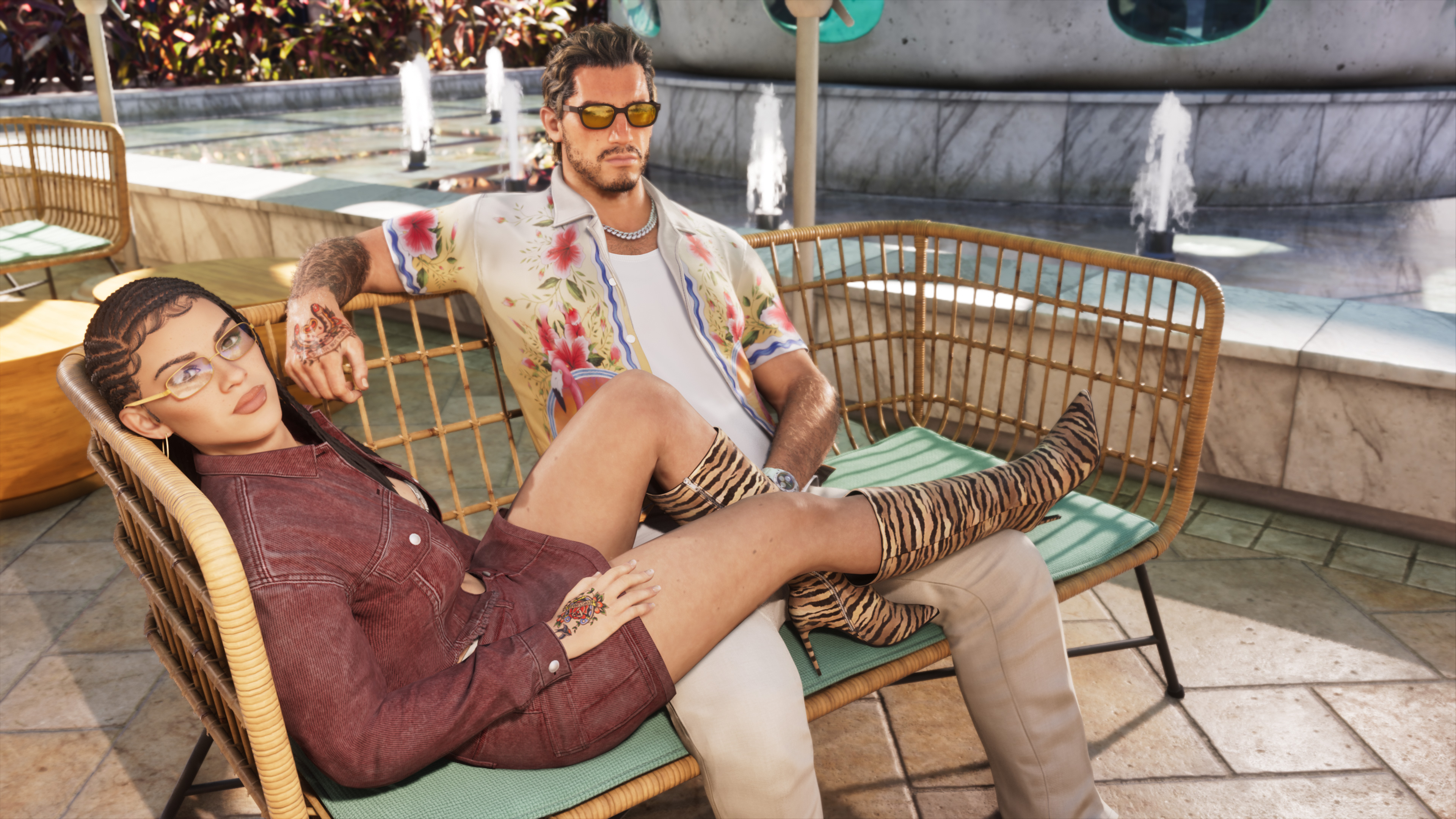
Famitsu: Are there more outfits in this game than there currently are in GTA V?
Rob: We have thousands of outfits. There are more options for character customization than ever before. You’ll obtain outfits by completing missions or purchasing them from stores.
As we also announced when pre-orders were revealed, this game has more customization options than ever before, including a wide variety of hairstyles. There are countless clothing stores and hair salons scattered around the map. You can cut your hair at a hideout as well, but the customization options there are limited. If you want to try lots of hairstyles, you’ll have to go to a salon.
Famitsu: What kind of experience do you want to provide to GTA VI players?
Rob: The story. And the depth and level of detail in each of the systems.
I think you’ll be able to lose track of time immersing yourself in the world of GTA VI, whether you’re committing robberies or simply wandering around exploring — as Jason, as Lucia, or as both of them.
Famitsu: The more compelling you make the game systems, the more data and development work they require, and the greater the amount of work needed to implement them.
Rob: Exactly. Every task, every feature we add, creates another challenge.
During the development of RDR2, we didn’t want the game world to be somewhere where all you could do was draw a gun and shoot. While walking around, Arthur keeps his gun holstered, and with the press of a button you can greet people or have conversations — but while you’re talking, you can also point your gun at the person you’re speaking to.
If violence were the player’s only action, all we would have needed was for people to react by running away. But by creating that system, we also had to provide reactions to kind words, insults and so on. That dramatically increased the amount of work.
However, having managed to implement that system in a world set 100 years ago with a relatively small population, we began to think that perhaps it would be possible at the scale of this game as well.
And we achieved it. It was difficult, but I think the effort was worth it.
Famitsu: RDR2 could be considered one of the very best games ever made in terms of depicting a realistic world, so it’s wonderful to see that concept and direction carried over into GTA VI’s modern-day setting.
Rob: Thank you. I’d be delighted if people can feel both the similarities between RDR2 and GTA VI and how things have evolved.
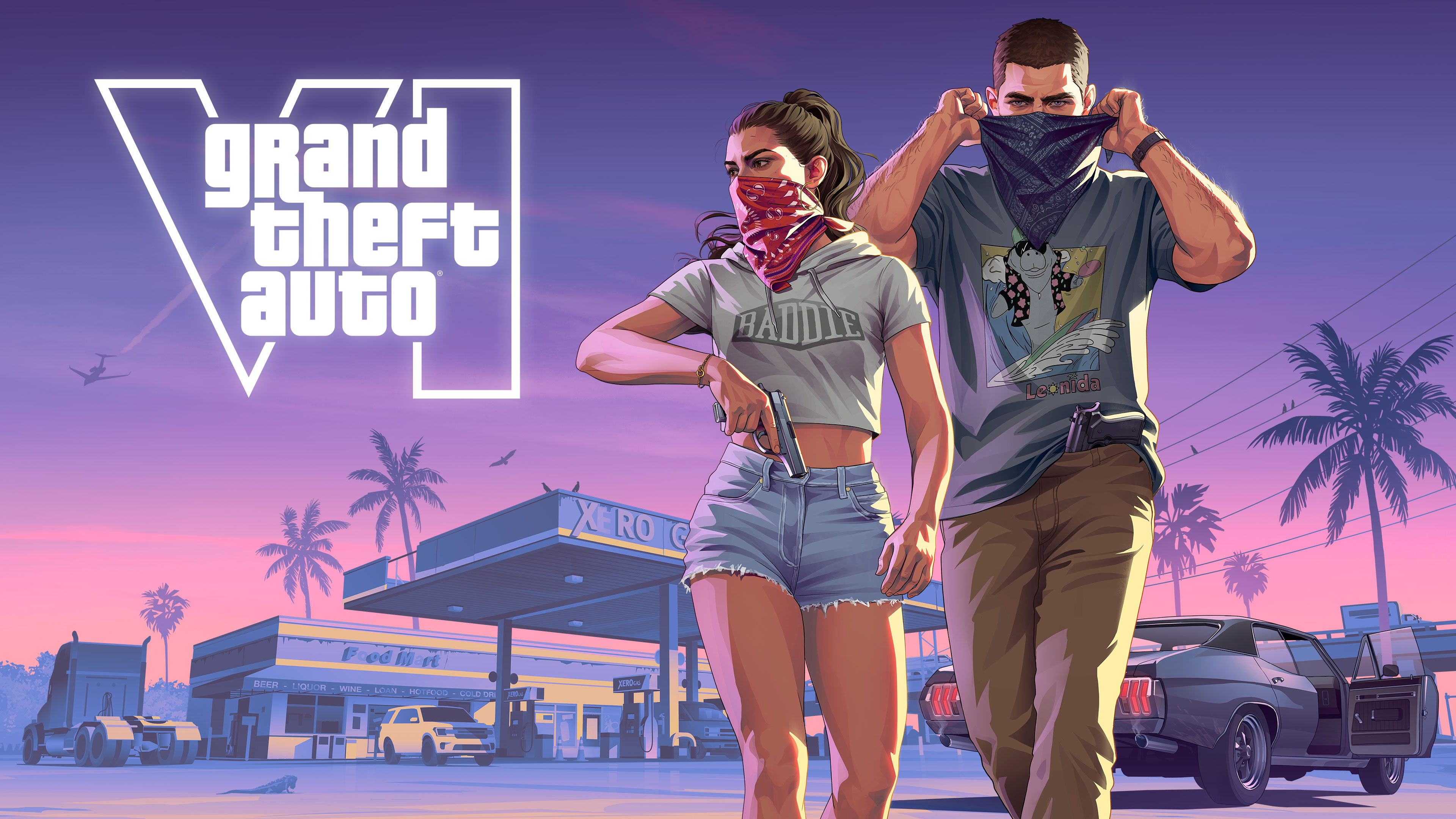
Famitsu: Finally, could you give a message to the fans in Japan who are eagerly waiting for GTA VI?
Rob: Before we started the interview, you asked me about my career, didn’t you? I think this is probably the first time I’ve talked about something like this in an interview, but it may be somewhat relevant to answering your question.
I joined Rockstar Games in 2003. Before that I worked at another game company, but when GTA III was released in 2001, like many people, I was absolutely blown away.
When GTA: Vice City was released in 2002, I was also incredibly impressed by what the game and its development team had accomplished, and I knew I absolutely wanted to work at this company. I kept knocking on the door for six months, and eventually I was hired and joined in 2003. Working on the GTA series had always been my dream.
I’ve now been at Rockstar Games for 23 years, and during that time I’ve had the opportunity to work on many different titles. I’m probably the biggest GTA fan myself, and I’m convinced that this series has the power to push the medium of video games into new territory.
Getting to work on this game with this team and accomplish what we have is a dream come true. I hope all of you will love this game too.
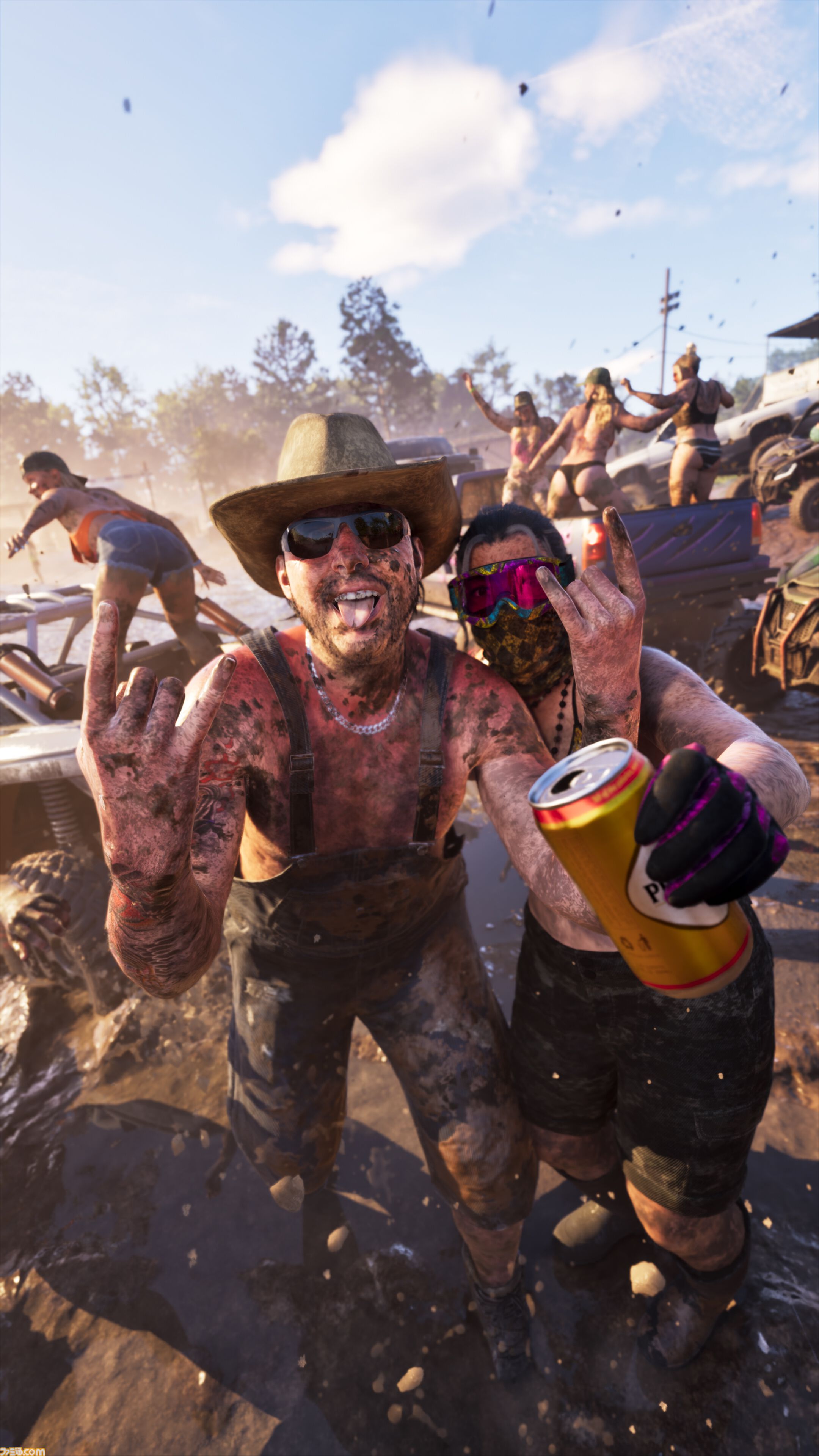
This article has been translated from the original Japanese. Some words, phrases or meanings may differ slightly in translation, but we have aimed to preserve the original meaning and details as accurately as possible. Please check out the original article at Famitsu for the original Japanese version.