
Strauss Zelnick on GTA 6, Rockstar, Live Services, AI, and Take-Two’s Future
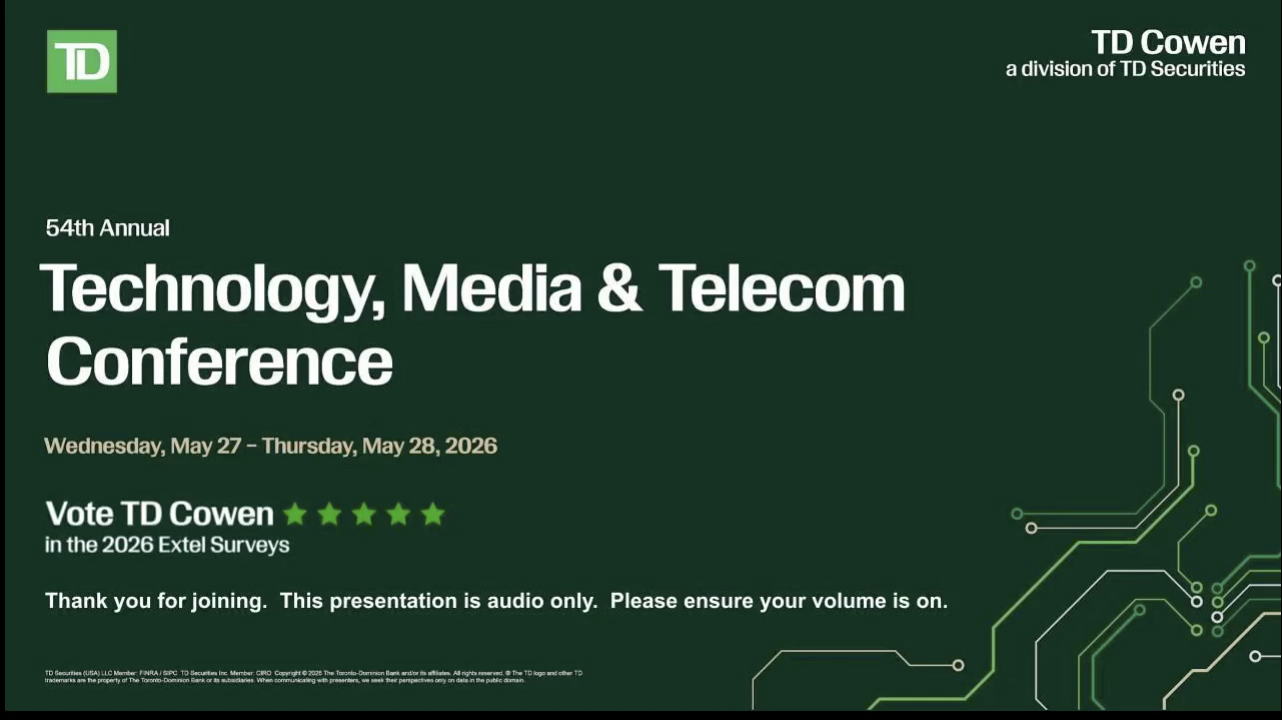
Read a transcript of Take-Two CEO Strauss Zelnick's GTA-related answers from his presentation at the 54th Annual Technology, Media & Telecom Conference with TD Cowen.
Below is a selection of notable questions and answers from Strauss Zelnick's appearance at the TD Cowen conference on May 27th. There are some other questions which I skipped over with regards to NBA 2K and Mobile gaming, but the transcript below should cover everything GTA-related which was discussed. I typed it up myself, so do let me know if there's any errors.
During the wide-ranging 33-minute interview, Take-Two Interactive CEO Strauss Zelnick discussed Rockstar Games’ ambitions for GTA 6, how success for the title will ultimately be measured, the long-term importance of engagement and recurring consumer spending, and why Take-Two deliberately avoids annualising its biggest franchises.
Zelnick also reflected on the evolution of GTA Online and the wider GTA ecosystem, explained why Rockstar’s success cannot simply be replicated by throwing more staff or technology at development, and spoke about the company’s broader strategy beyond Grand Theft Auto, including future AAA projects.
The conversation later shifted toward artificial intelligence, where Zelnick argued that AI tools may improve efficiency and asset creation across the industry, but stressed that creating hit entertainment still depends on exceptional creativity, talent, and execution rather than technology alone.
Transcript
Host: “I have been joking with clients that Artificial General Intelligence is like GTA 6. It’s always 12–18 months away! But I’m going to have to retire that joke because we are now less than six months away from GTA 6. We do think it’s going to be the biggest entertainment launch of all time, which is a high bar. So how do you define success for a product like that, beyond revenue and units? And how does Rockstar define success, and what’s their ambition for the product?”
Strauss: “We are aiming to make, in everything that we do, the greatest entertainment on earth. That’s our goal. Our goal is to make phenomenal entertainment. Our strategy is to be the most creative, the most innovative, and the most efficient company in the entertainment industry. And each of our labels, in its own way, tries to create something extraordinary in everything that they do - and sometimes we fall short, of course.
You can probably put a fine point on that at Rockstar, given the Metacritic scores that they’ve always enjoyed and the breathtaking success of Grand Theft Auto and Red Dead, and other intellectual properties that Rockstar has brought to market over its 25-year history.
So you can imagine that the ambitions are very, very high, both for Rockstar and for Take-Two. But I think you would define success - you can’t help it - in terms of the scores that it gets, or reviews that it gets, and the unit sales.”
Host: “Do you think about it in terms of the engagement over the long term?”
Strauss: “Well, of course. We can’t help thinking that way because Grand Theft Auto V has thrived through three console generations and has sold-in 230 million units, and has been around for the better part of 13 years and shows no signs of abating. And GTA Online, of course, remains a very powerful property. You’ve seen the economic effect of that title when Rockstar generates meaningful unit sales year in, year out, and also has significant recurring consumer spending year in, year out. And we’ve also guided to significant recurring consumer spending going forward for Rockstar.”
Host: “You did talk about GTA recurrent consumer spending growing this year, and I know you’re not going to divulge what the plans are for the GTA 6 launch, but can you talk about what Rockstar has learned from GTA Online and Red Dead Online in terms of running a successful live service title? What they may have learned from observing other parts of your portfolio, like NBA 2K and Zynga, or even looking at some other high-profile live service launches in the last few years that haven’t gone well?”
Strauss: “So remember, we have live services at Rockstar now, right? We have GTA Online, we have GTA+, we have the FiveM business, so we already have that in market, and we expect those businesses to continue to thrive. There’d be no reason that they would not. What have we learned? Give consumers something great and they show up for it. We’ve learned the oldest lesson in the entertainment business.”
Host: “I would think Rockstar would probably, beyond GTA 6, not like to have another 13-year gap between GTA releases. Maybe not? I mean, obviously GTA 5 has done very well. I assume Rockstar has other ideas that they’d like to pursue beyond just GTA. So how are you and they thinking about how they evolve over the next 10 or so years to best serve their audience and create value for the company organisationally?”
Strauss: “The only way I can answer that is to say these are the very conversations we always have with all of our labels - Rockstar included - and we have a plan. Our plan might not be to have a specific cadence around our properties because we’re not a cadence-driven company. We never have been.
I didn’t show up at Take-Two nearly 20 years ago and say, the way everyone else was, ‘we’re going to annualise our products like clockwork.’ To the contrary, I was an outlier at the time, and I said the only products we’re going to annualise are sports entertainment properties. We are specifically not going to do it with everything else.
That was very unheard of in the business at the time, and the thesis was that if you do that: A. You’re going to burn off your intellectual property because you’re in market too often. B. You can’t possibly deliver the kind of quality you need to deliver to deliver an A+ property by doing that.
I’m not going to name the properties, but we’ve seen that some very competitive properties have had good annual releases and bad annual releases because it’s just so hard to do.
Also, if you take a look at the intellectual property landscape when I joined Take-Two in 2007, GTA was not the number one property. It was a top five property. It was not the number one property. And take a look at what happened to the properties that were higher up in the food chain that were annualised to see what happens.
So we set a new standard in the business, which is you have to make stuff that’s great, and creating some anticipation on the part of the consumer is a good thing. That doesn’t mean that we said there should be an X-year gap between releases. What has driven the gap is the amount of time it takes to do something that is as good as it can possibly be for that intellectual property.
In the case of GTA 5, it was not a simple story of, ‘Wow, guys, took you a long time to come back to market,’ because look at what Rockstar launched. They relaunched again and they actually remade the title for PC. They relaunched and remade the title for each new generation, and they launched GTA Online, plus other services that were either acquired or launched, to the extent that GTA’s become a thriving business. That’s an ongoing business.
So it’s not as simple as, ‘Wow, what have you been up to for 13 years?’ The answer is they’ve been up to quite a lot. I think one of the reasons that GTA 6 is so widely anticipated is that we now have a GTA ecosystem that Rockstar built.”
Host: “I would imagine it’s not as simple as just saying, ‘Oh, let’s just pour more resources into Rockstar,’ that they probably are finding the right people to work in that environment is probably not the easiest thing in the world?”
Strauss: “Not to name names, but a very big, resource-heavy company went into the video game business about, what, 12 years ago? I believe Strauss is referring to Amazon. And they’ve had one title that was moderately successful. It is not about headcount. It is not about technology. It is about the intersection of talent, passion, and resource that creates hits.
It isn’t as simple as, ‘Let’s hire more people.’ Obviously, you have to hire the right people and then manage them in the right way, with the right creative vision in the first place, and then with daily attention to execution, which is ultimately my job, right?”
Later...
Host: “Let’s talk about some other things that you’ve talked about coming in the triple-A side. You’ve announced Judas, you’ve announced Project Ethos. I think you said last week that you would have seven triple-A sequels in total in fiscal 2028–2029, which I assume includes the BioShock sequel that you’ve talked about. As you mentioned earlier, BioShock’s been brewing for a long time. Judas, I think, you announced in 2022. When you think about value creation of the company beyond GTA, how important are these titles to that?”
Strauss: “Incredibly important. And I think in the past few years, GTA’s total business has been less than 15% of our overall net bookings, if I have that right. So 85% of the company has not been about GTA. And that is in no way to detract from its importance as a title, obviously. It’s to make the note that we’re a big, diversified company with lots of hits, and half of our business is mobile, of course, and half is console and PC.
So our job is to grow in all directions because we’re serving consumers everywhere. Every kind of consumer, wherever they are, however they want to engage. That’s our job, that’s what we’re trying to do, that’s our mission.”
Later...
Host: “An executive at another company I cover said that AI is ultimately going to allow a team of three people to develop a GTA-class game within a week. What’s your view on that statement?”
Strauss: “Wouldn’t that be great for us? No, that’s not tongue in cheek! We have a three-part strategy: be the most creative, be the most efficient, be the most innovative. And if we have tools that allow us to be more innovative, more efficient, and more creative, we’re all in. That’s what we’ve used tools for before.
I think the problem with the conclusion that people reach when the executive says that is, ‘and therefore they will make a hit that’s as big as GTA,’ and there’s zero evidence for that, because we’ve had technology forever that would allow people to recreate what we do. Maybe it’s not done in a week, but who cares? Given how much GTA is worth, if you could make something that’s as good as GTA and performs as well, would it bother you that it currently takes 13 years? Of course not. Why wouldn’t you do that?
People have tried. Anyone run into Assassin’s Creed? I mean, people have tried to make titles that competed directly with GTA. And by the way, this isn’t my way of saying no one could ever compete with us. To the contrary, I’m simply saying that the ability to use tools to create intellectual property is totally different than creating hits. It’s just a different exercise.
Anyone see the 007 early reviews and early scores? It was done by my friend Casper Daugaard and his team, and it looks phenomenal. It looks great, and they’re outside the major studio system. It is absolutely possible to make something of great quality, and if tools allow you to do that, great. But they’ll also allow us to increase our quality and increase our efficiency.
Making a hit is different than making an asset - they’re just different things. I have no doubt that technology is going to allow us to make better assets more efficiently. That’s the history of technology. But making hits seems to get harder and harder and harder as entertainment industries mature.
We do not have a monopoly in hit creation. As I said earlier, arrogance is the enemy of continued success. I don’t believe for a minute that technological advances that give someone else an edge won’t give us an edge. It’s just the toolset. It’s available to everyone.
The key thing is that all of this is going to be totally commoditised. Show me one AI company that’s offering their services or products to companies on an exclusive basis. They don’t exist. So when that executive has that button to push, I’ll have the same damn button!
The folks at Rockstar seem to be able to make these massive hits, and lots of other people have tried - lots and lots, including former Rockstar employees - and so far, they haven’t been able to do it. It doesn’t mean they can’t in the future, by the way. We’re always running scared. But it won’t be technology that changes the game.
What’ll change is that some extraordinarily creative individual or individuals are going to show up and do something astonishing. Our goal is to get those people to work within the Take-Two system. If we fail to do that, we fail.
If we continue to be the home of creativity, the company that welcomes and encourages and supports and finances the best talent in the business, then the rest will take care of itself. Technology is in service of those goals, not at odds with them.”
Watch Online
You can watch (or listen - it's audio only) to the full presentation here.